Wallet
Designing a digital wallet that makes virtual assets easy to understand and manage.
The Wallet is the financial hub of the G-loot platform, allowing players to manage their virtual currencies, rewards and purchases from a single place. The challenge was to create an experience that gave users confidence when interacting with digital assets while keeping complex transaction information easy to understand.
Product Design / UX Research / Information Architecture / Prototyping / User testing
2021 - 2022
G-Loot, later rebranded as Stryda, was a Stockholm-based esports company specializing in stats tracking, player identity, and competitions. It permanently ceased operations in 2023.
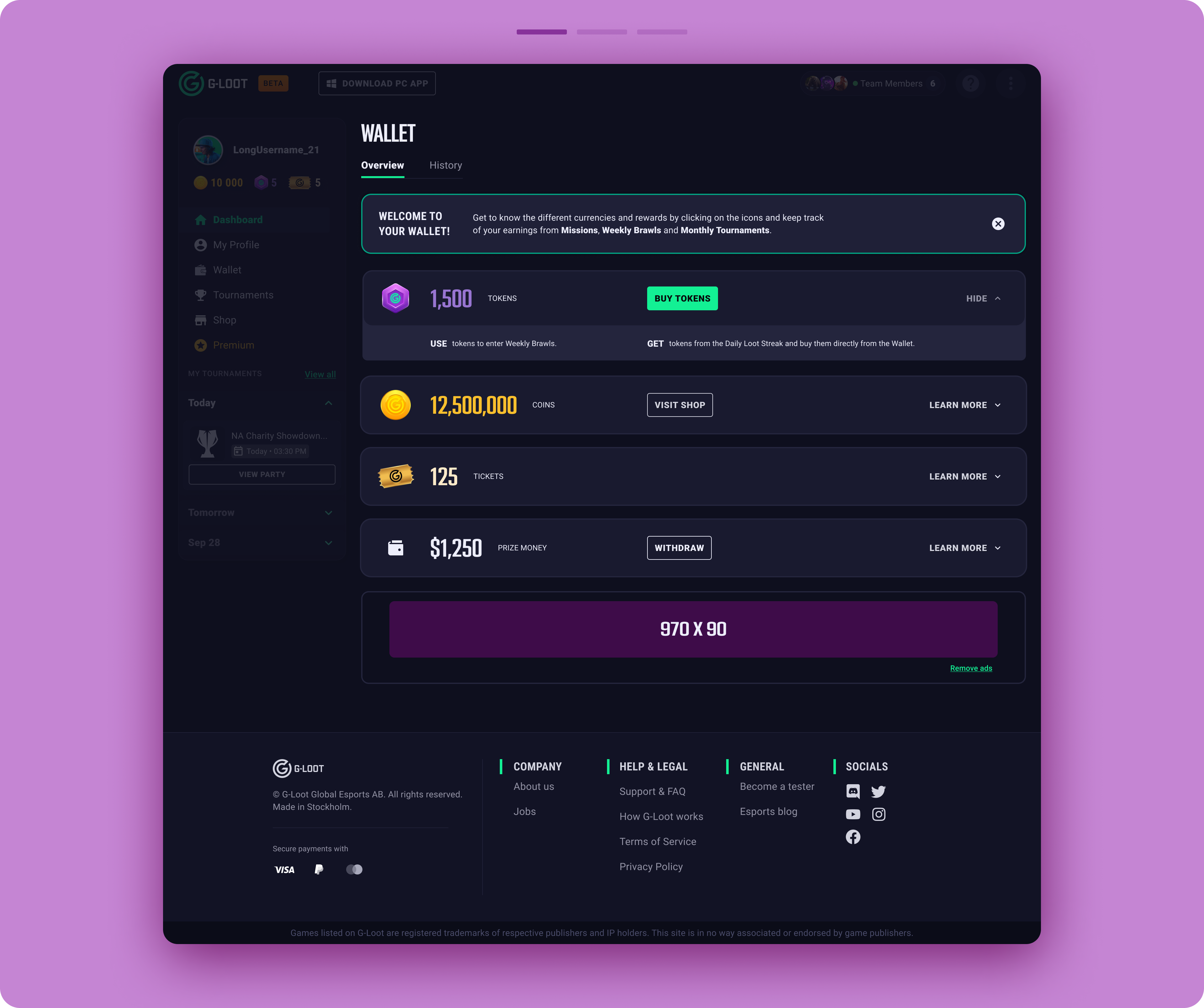
Browse the gallery to view the final design
The challenge:
The wallet supported several user activities, including:
- Viewing available balances
- Understanding multiple virtual currencies
- Tracking transaction history
- Redeeming rewards
- Purchasing premium content
- Monitoring account activity
As additional features were introduced, maintaining clarity became increasingly important. The goal wasn’t simply to display financial information, it was to help users understand where their assets came from, how they could be used, and what actions were available next. Players expect immediate feedback and complete confidence when interacting with virtual currencies. Several design challenges quickly became apparent:
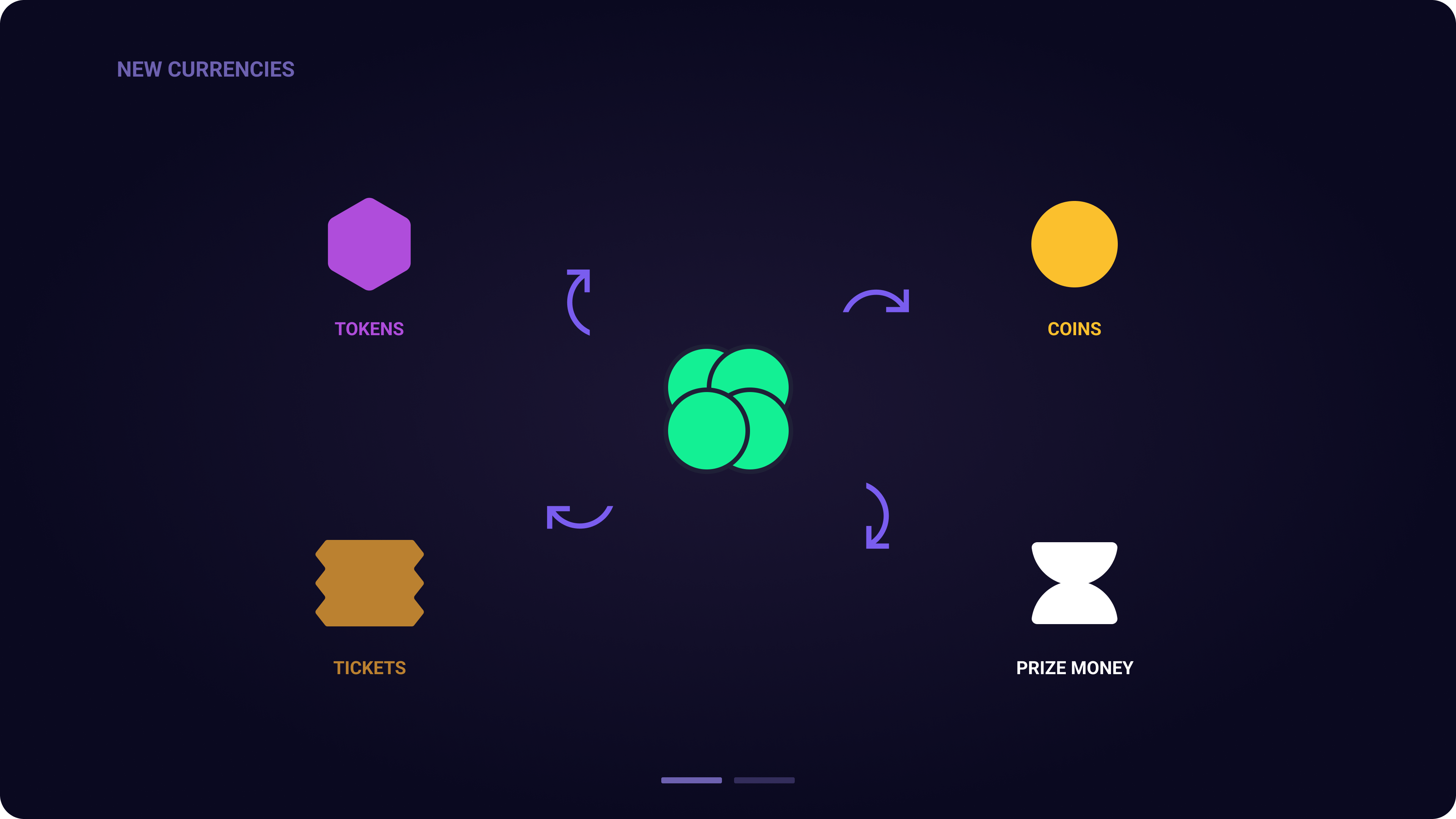
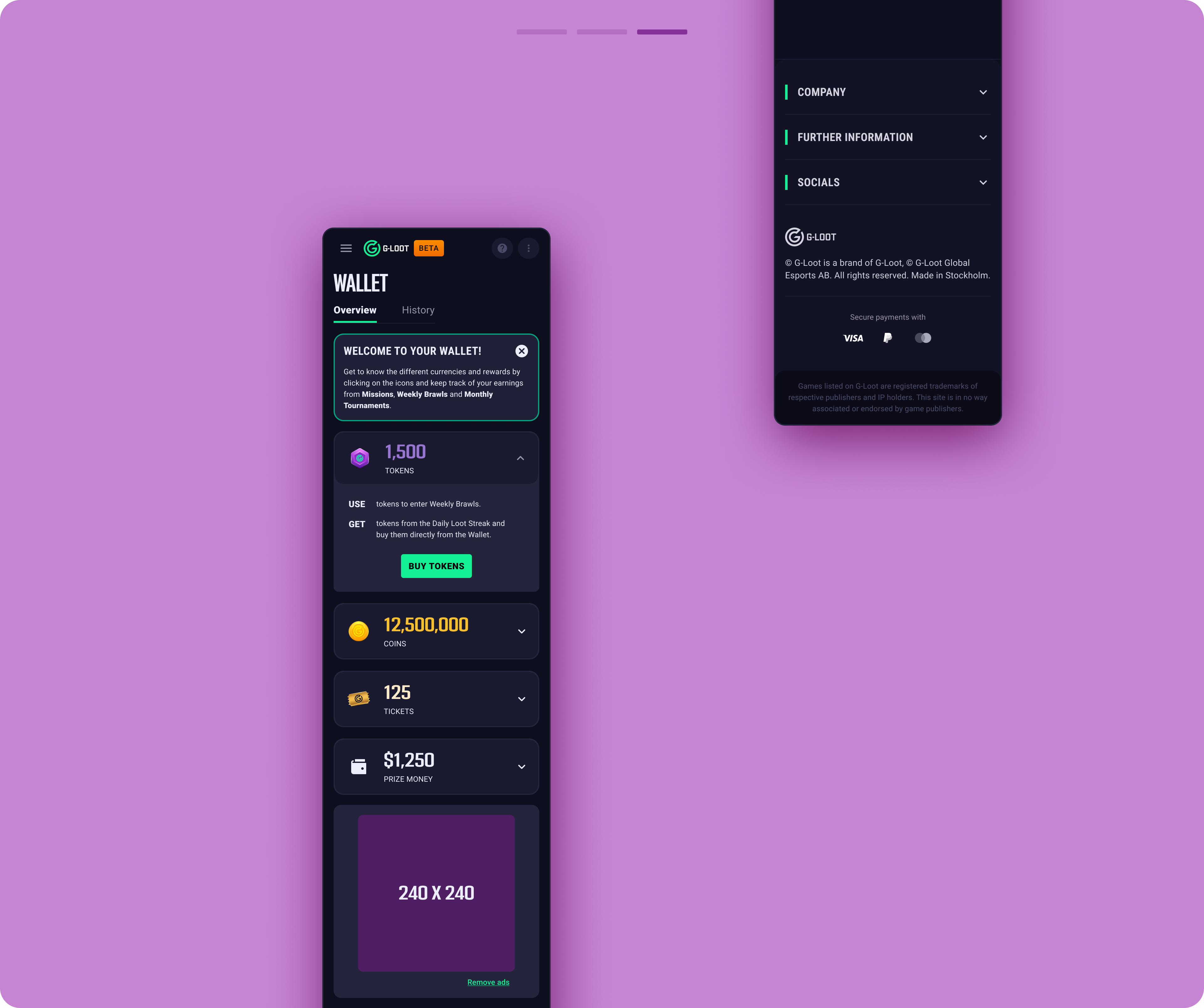
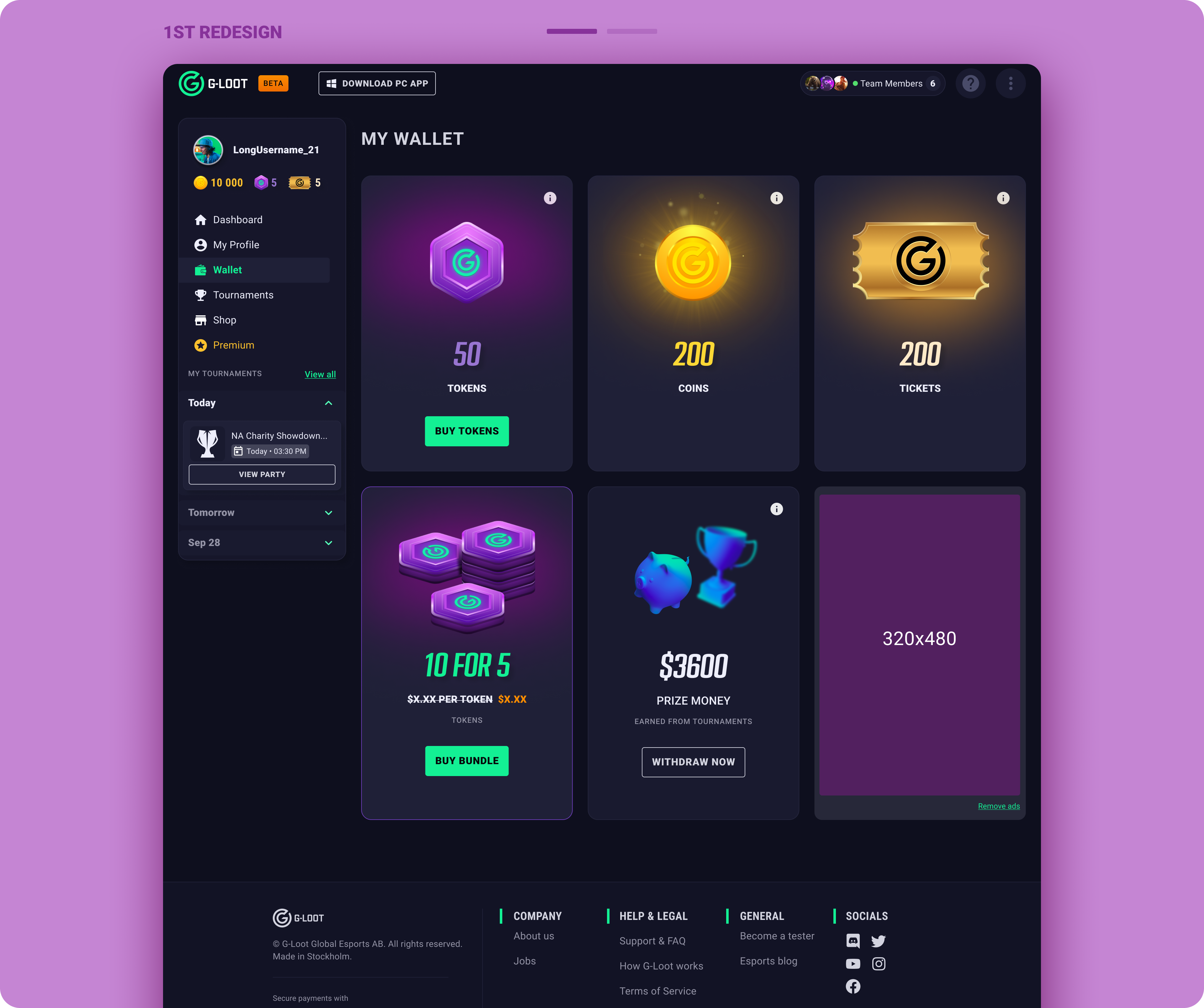
- Multiple currencies: Different balances and reward systems increased cognitive load (tokens, coins, tickets, and prize money).
-
Limited transparency: Users needed clearer visibility into previous transactions and account activity.
- Encouraging engagement: The wallet should not only inform users, but also encourage them to redeem rewards and continue participating within the platform.
- Building trust: Financial interfaces require consistency, clear feedback and predictable interactions.
Design goals:
The redesign focused on creating a wallet experience that was:
- Easy to understand
- Transparent
- Visually organised
- Scalable for future payment features
- Consistent with the overall platform
Design exploration:
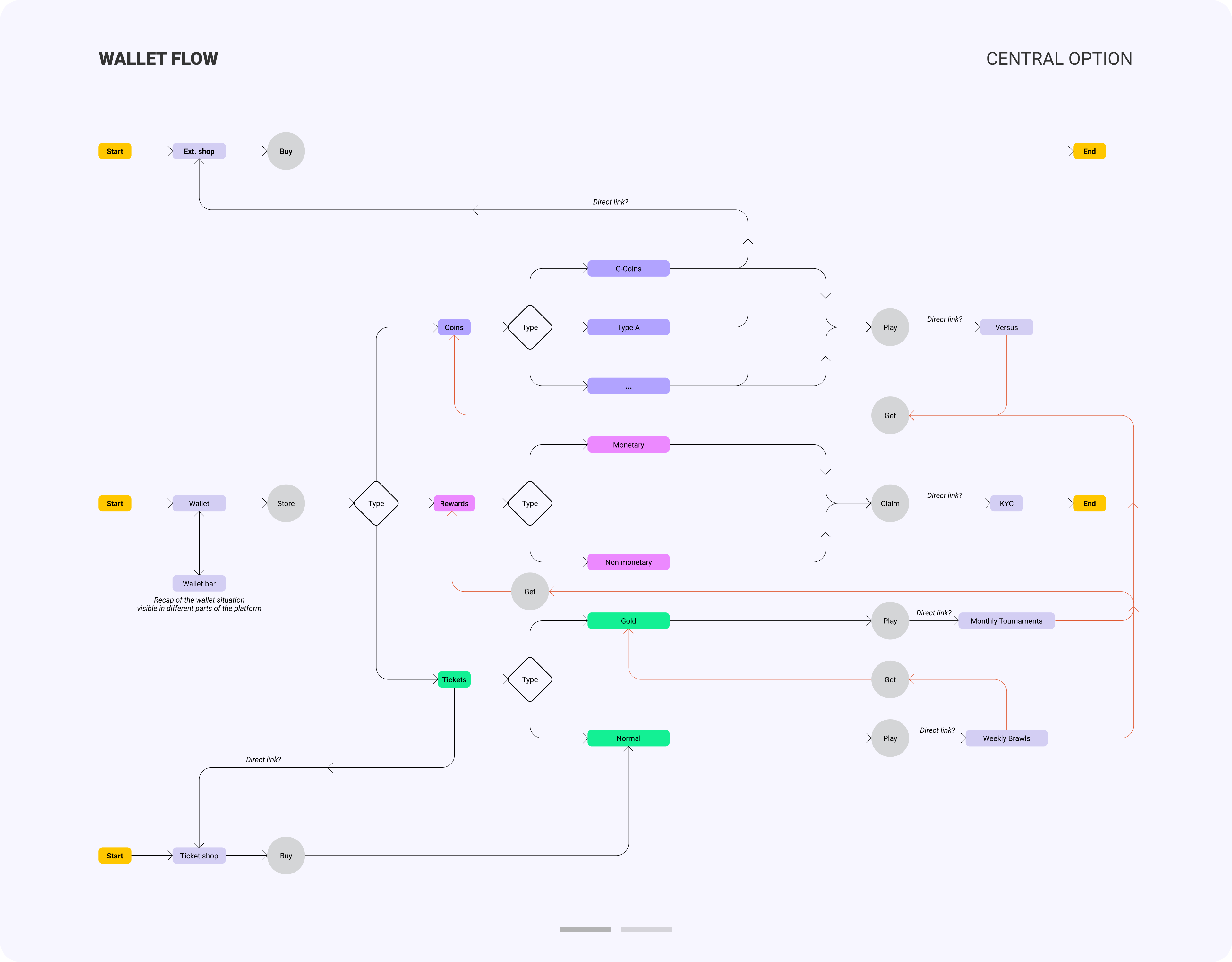
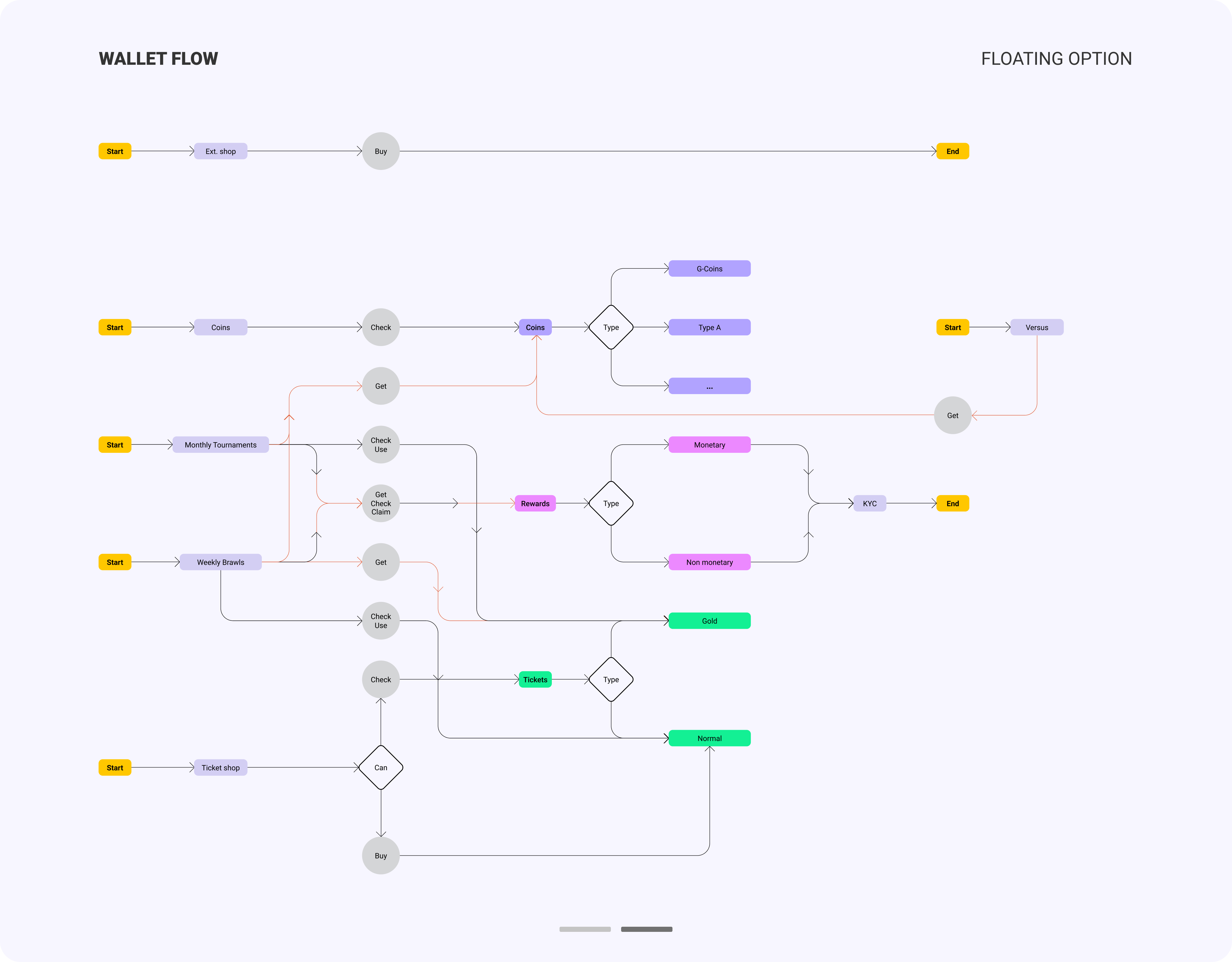
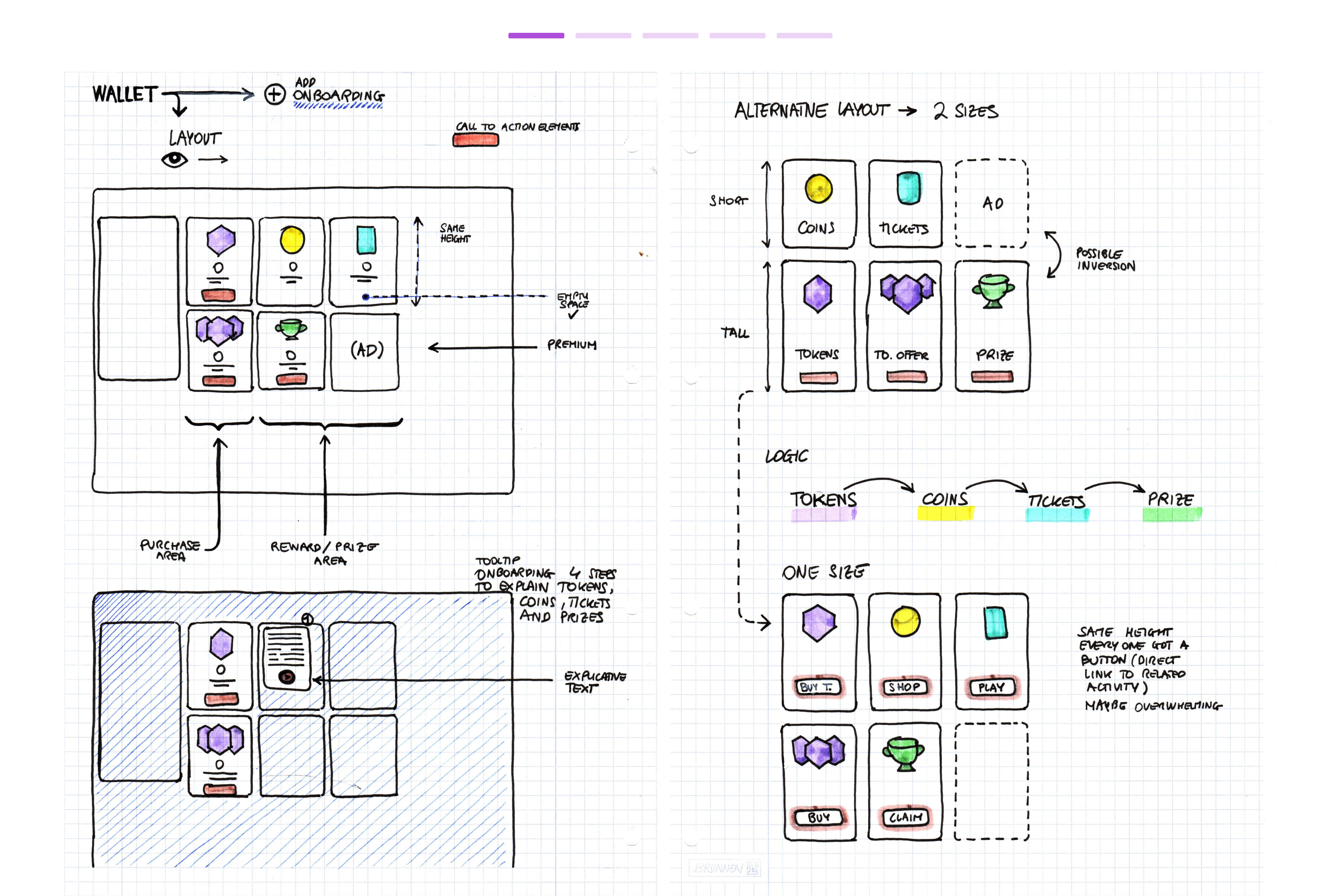
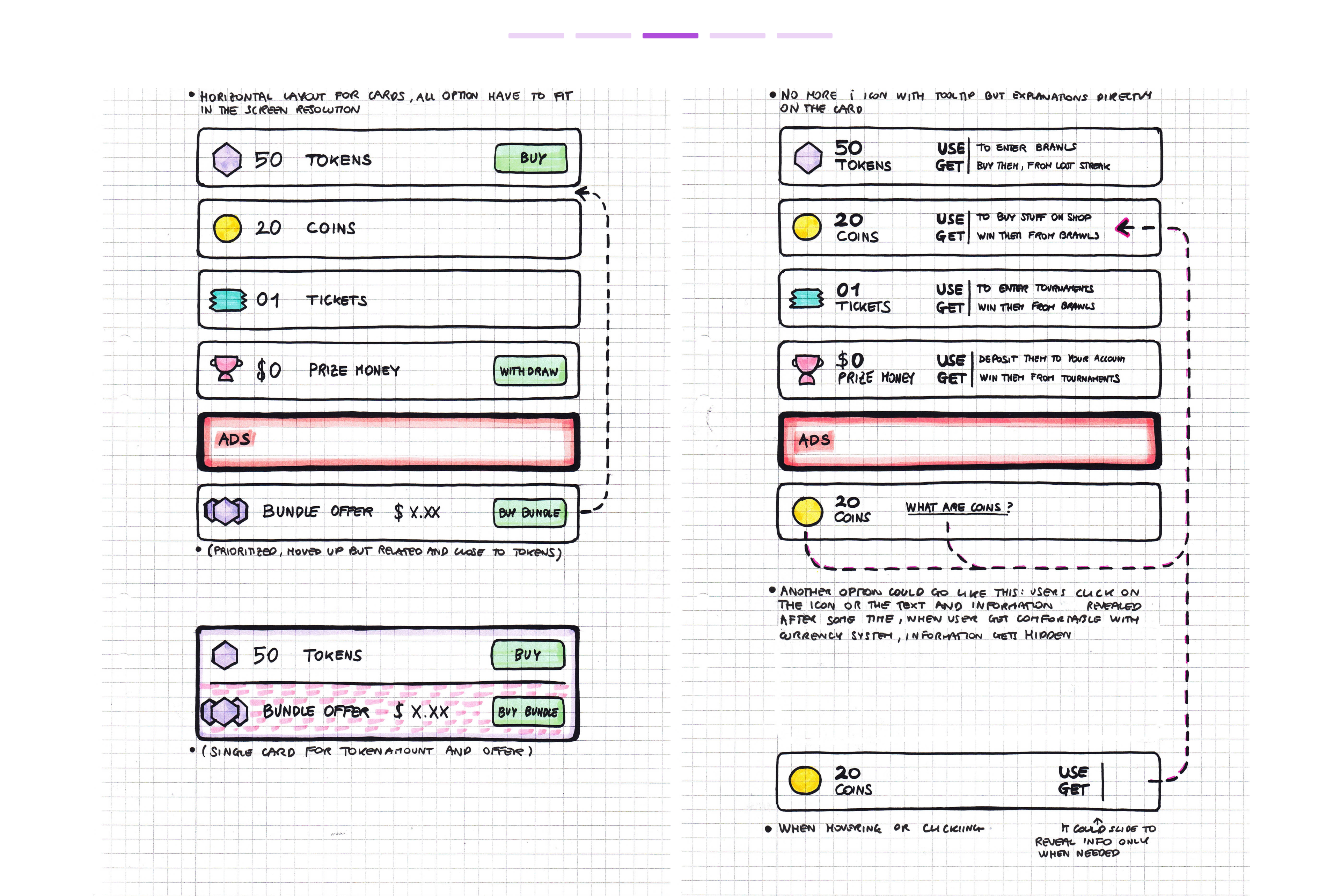
- Information hierarchy: How much information should users see immediately? Should balances or recent activity receive the most emphasis?
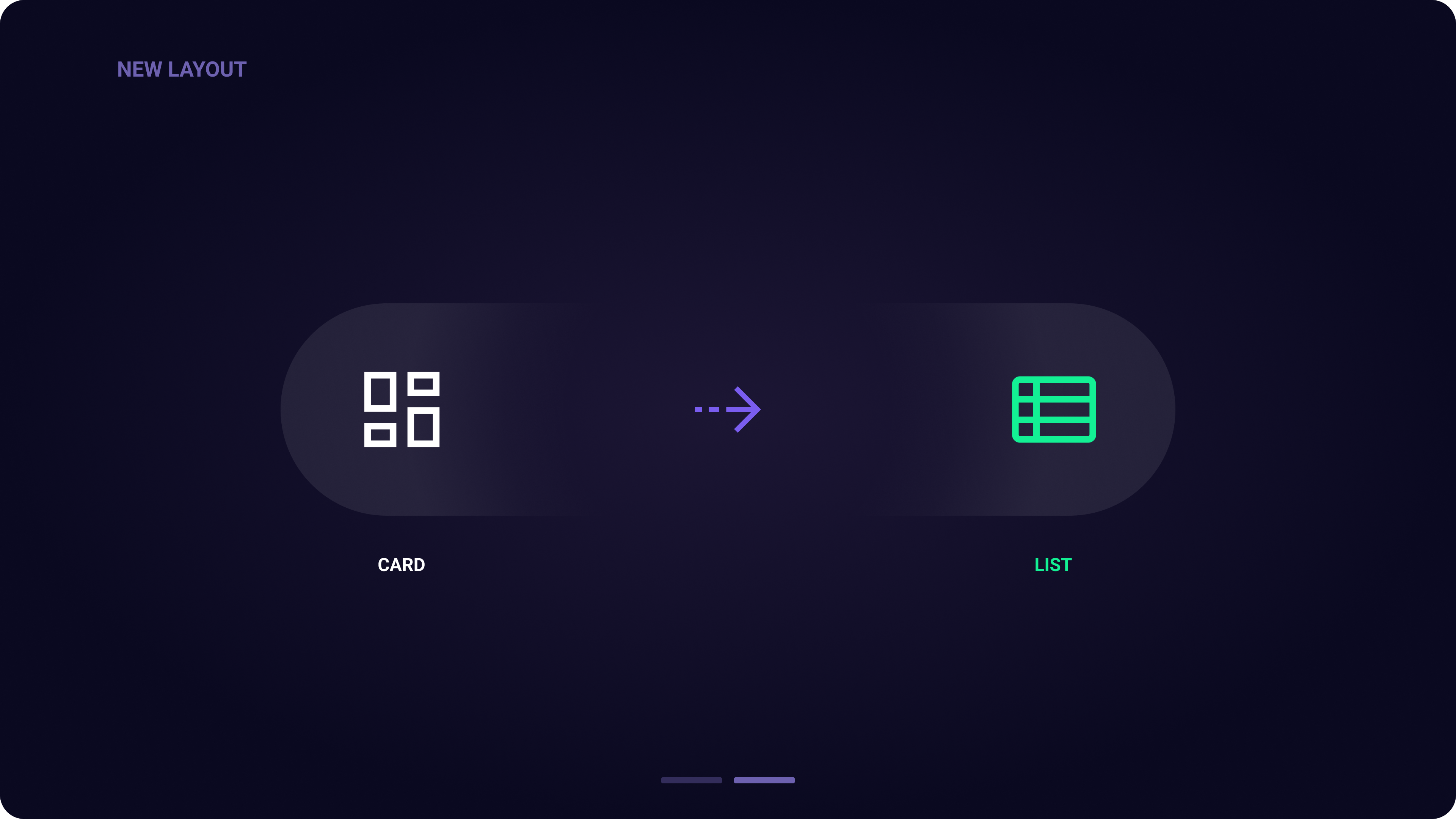
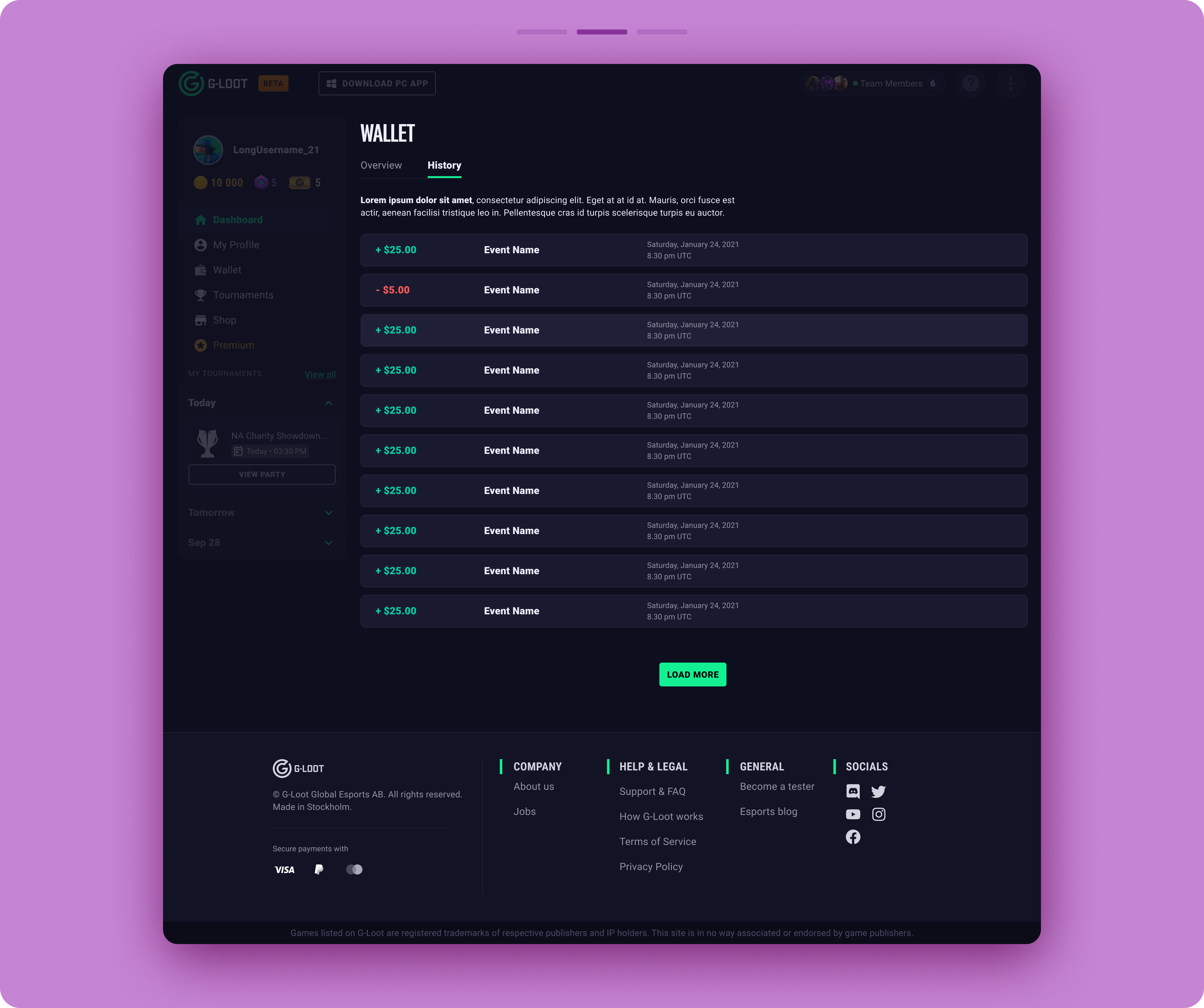
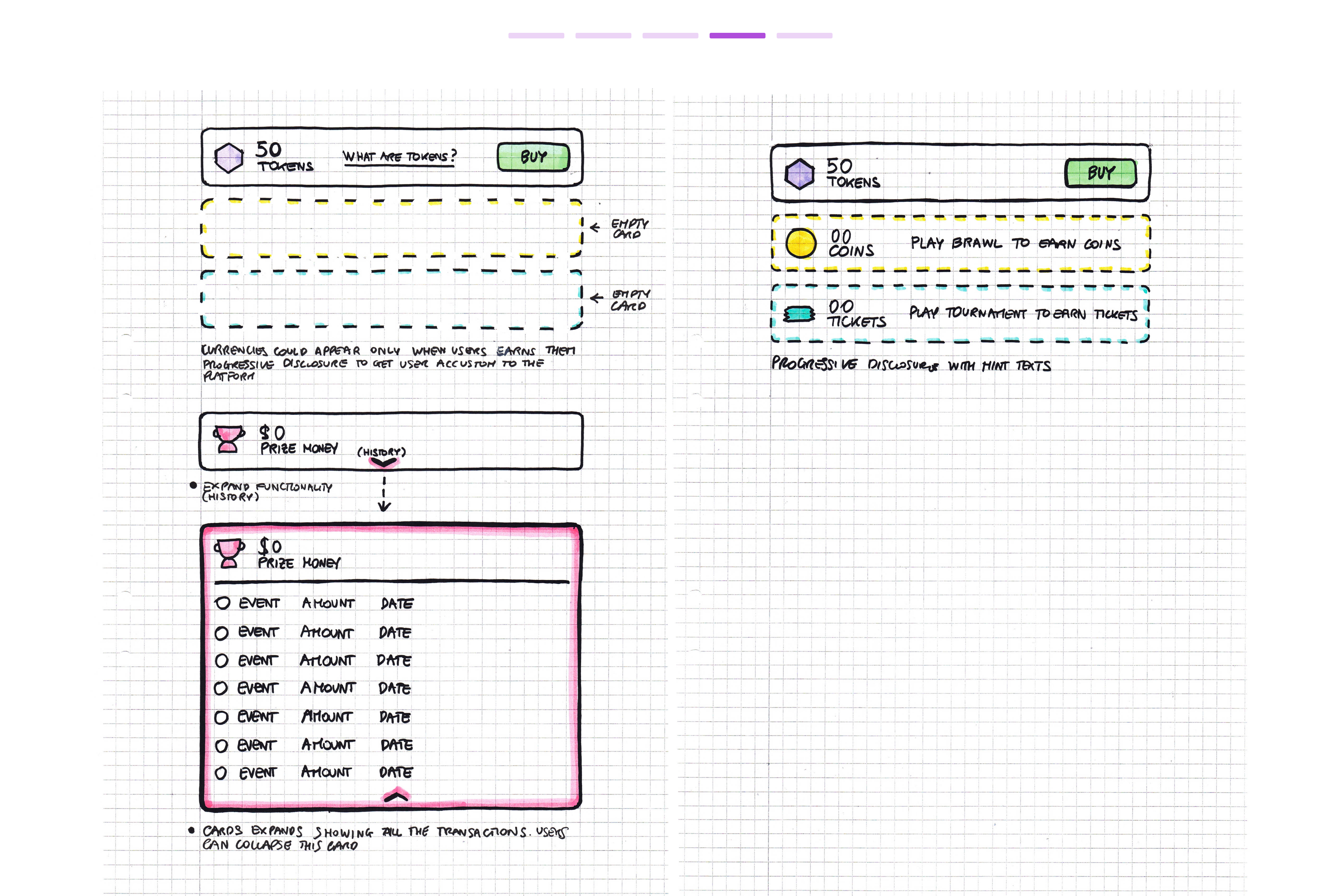
- Transaction history: Several layouts were explored to improve readability while supporting large numbers of transactions.
- Reward visibility: How could rewards become more discoverable without competing with essential financial information?
- Action prioritisation: Exploring different placements for
deposit, withdraw, redeem, purchase, transfer to support users’ most common actions.
The solution:
The redesigned wallet introduced a clearer structure for managing digital assets:
- Clear account overview: Balances and available assets were prioritised, helping users immediately understand their current status.
-
Improved transaction history: Activity became easier to scan, providing greater transparency into purchases, rewards and account changes.
-
Better action hierarchy: Primary actions were given greater prominence, reducing unnecessary navigation.
-
Scalable component system: Reusable UI patterns established a foundation for future financial features and additional virtual currencies.
Outcome:
The solution enables users to:
- Understand account balances at a glance
- Review previous transactions with confidence
- Access common actions more efficiently
- Interact with virtual currencies in a more transparent way
Reflection:
Financial interfaces rely heavily on trust. Whether users are managing real money or virtual assets, they need confidence that the system is clear, predictable and reliable. This project reinforced the importance of information hierarchy, clear feedback and transparency in helping users feel in control of their digital assets.
Redesign strategy
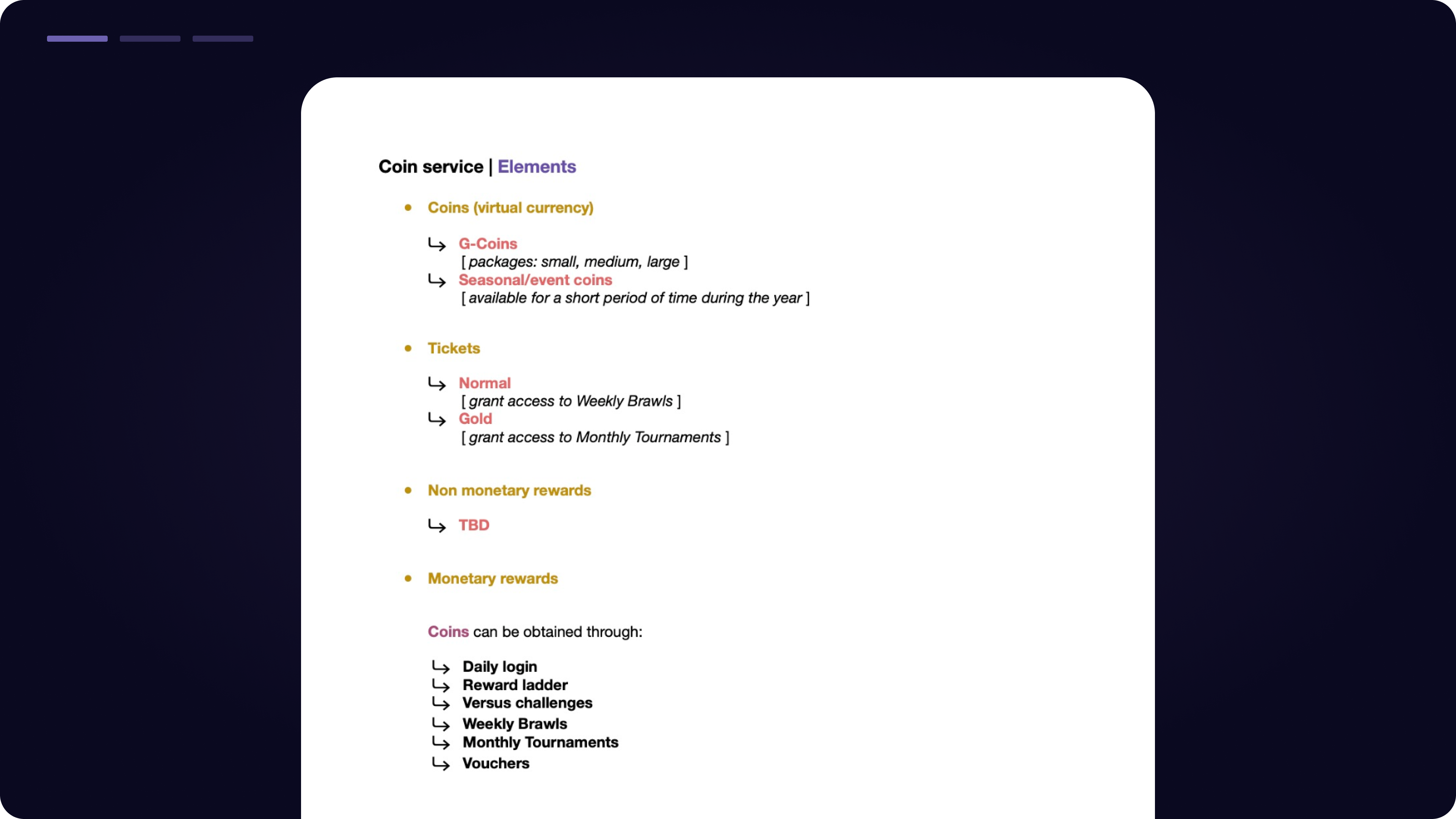


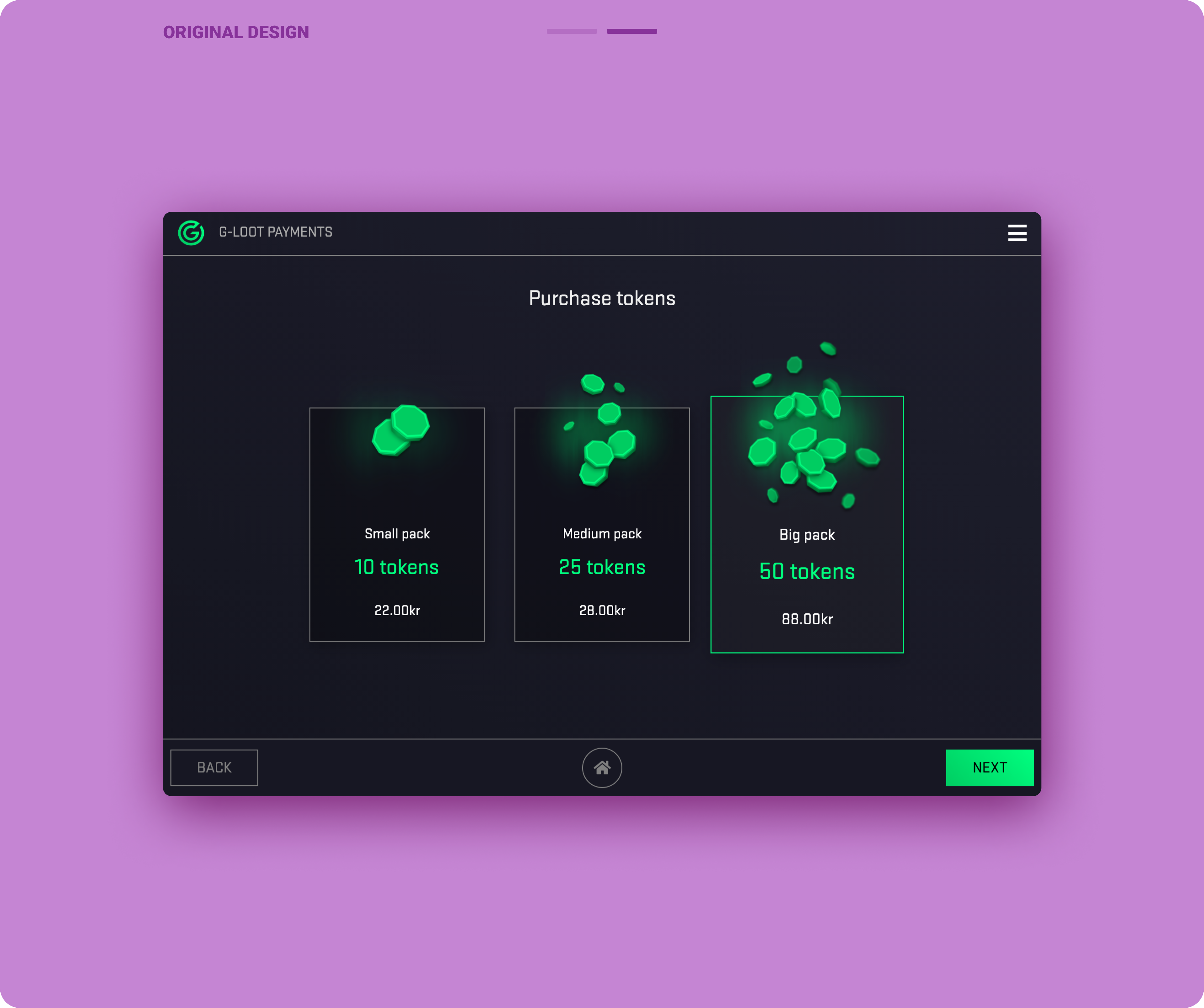
Previous designs
Development sketches


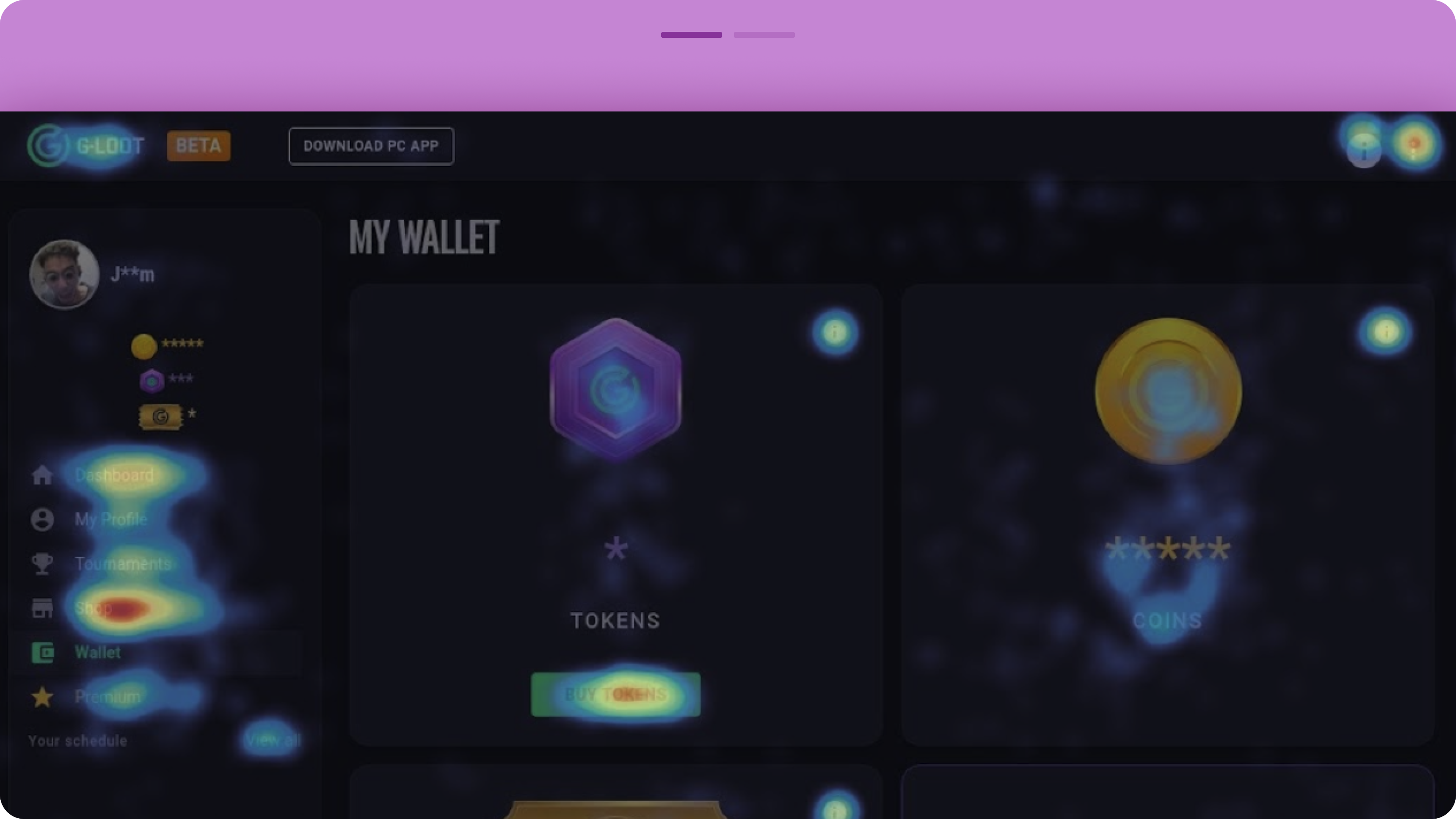
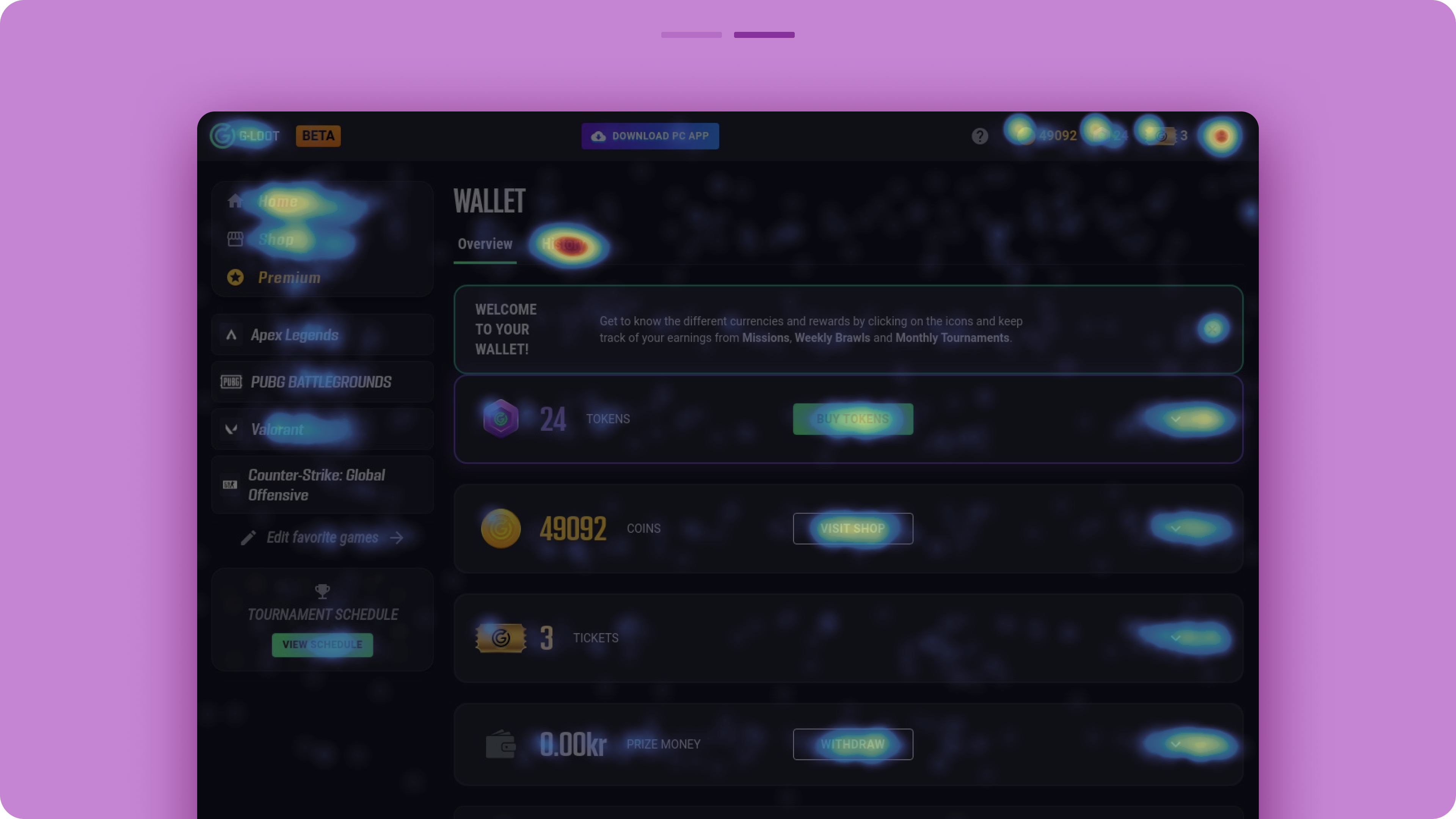
Heatmap comparison
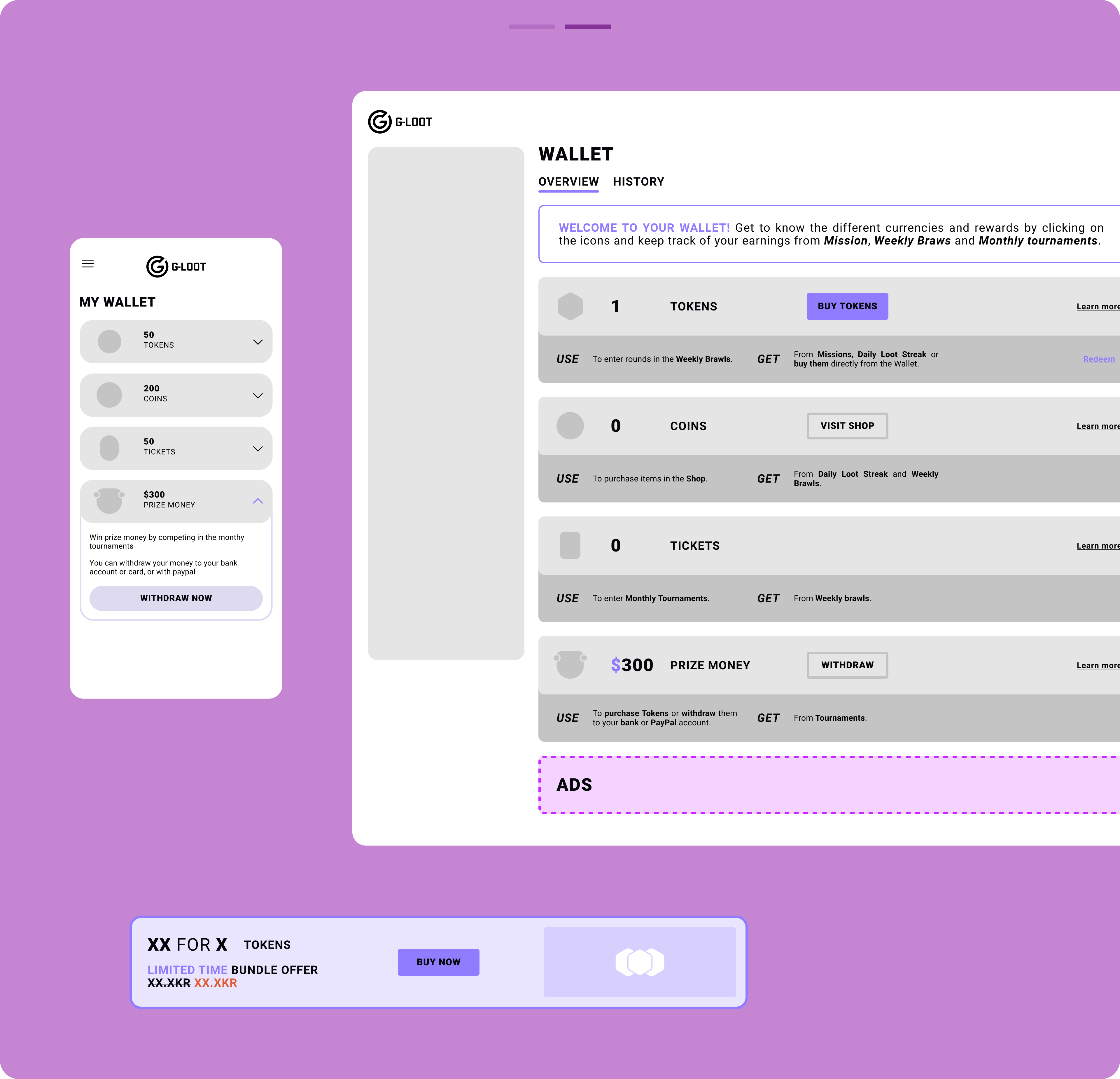
Browse the gallery to view wireframe samples