Toolbar Editor
Improving efficiency for one of the most frequently used tools in CryEngine.
The toolbar is one of the most frequently used components in CryEngine engine. Level designers, artists, and technical designers rely on it to access editing tools, manipulate objects, switch workflows, and perform hundreds of repetitive actions throughout game development. The objective of this project was to improve usability, reduce visual complexity, and create a more efficient workspace that better supports professional content creation.
Product Design / UX Research / Information Architecture
2020
Crytek is a Frankfurt-based video game developer and publisher known for creating first-person shooters and game development technology. CryEngine is Crytek’s proprietary game engine, used to develop their own games and licensed to other studios.
Browse the gallery to view the new workflow and goals

The challenge:
Professional creation tools naturally grow over time as new features are introduced. As additional commands, modes, and shortcuts are added, interfaces often become crowded and increasingly difficult to navigate. The existing toolbar exposed a large number of actions with limited visual organization, forcing users to spend unnecessary effort locating frequently used tools and understanding relationships between commands. The challenge was not to remove functionality, but to reorganize it in a way that improved speed without disrupting established workflows.
Unlike consumer applications, game engine editors are used continuously throughout the working day. Users develop strong muscle memory and expect interfaces to support rapid interaction with minimal interruption. Even small usability improvements can have a meaningful impact when repeated hundreds of times every day. The redesign therefore focused on preserving familiarity while reducing friction during common editing tasks.
Design principles:
- Organize by workflow: Rather than presenting tools as a long collection of buttons, related actions were grouped according to how designers naturally perform editing tasks.
- Improve discoverability: Clear visual grouping, spacing, and icon consistency make it easier for both experienced and new users to locate commands without slowing their workflow.
- Reduce visual noise: Unnecessary interface complexity was minimized through cleaner layouts and improved hierarchy, allowing important tools to stand out without overwhelming the workspace.
- Respect existing habits: Because professional users rely heavily on muscle memory, improvements were introduced without dramatically changing established interaction patterns.
Browse the full gallery the view the new design





The solution:
The redesigned toolbar provides a cleaner and more structured editing experience while maintaining the flexibility expected from a professional game engine.
Commands were reorganized into logical groups that reflect common editing workflows, making navigation more intuitive and reducing visual scanning. Spacing, iconography, and alignment were refined to improve readability and create stronger visual relationships between related tools.
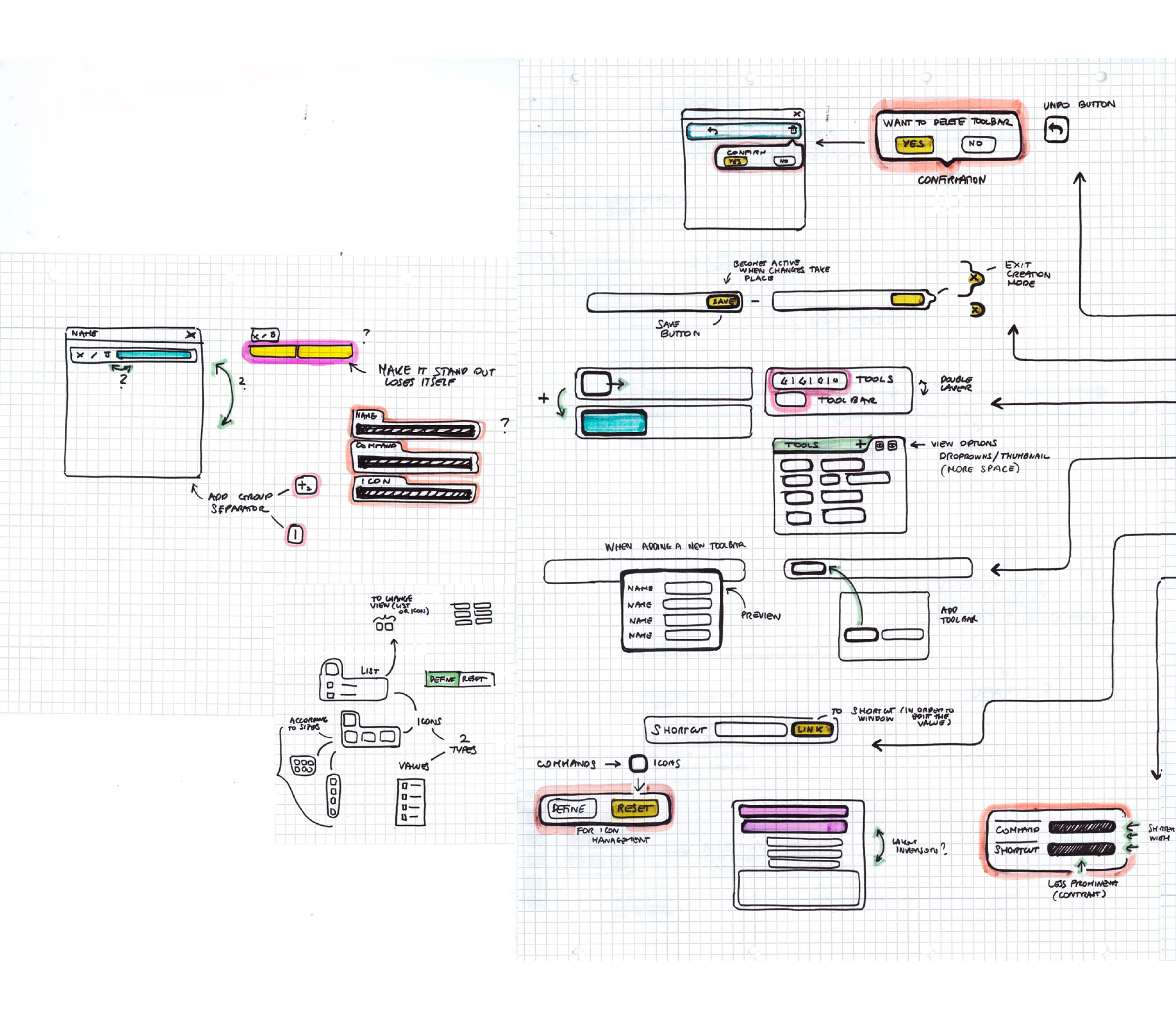
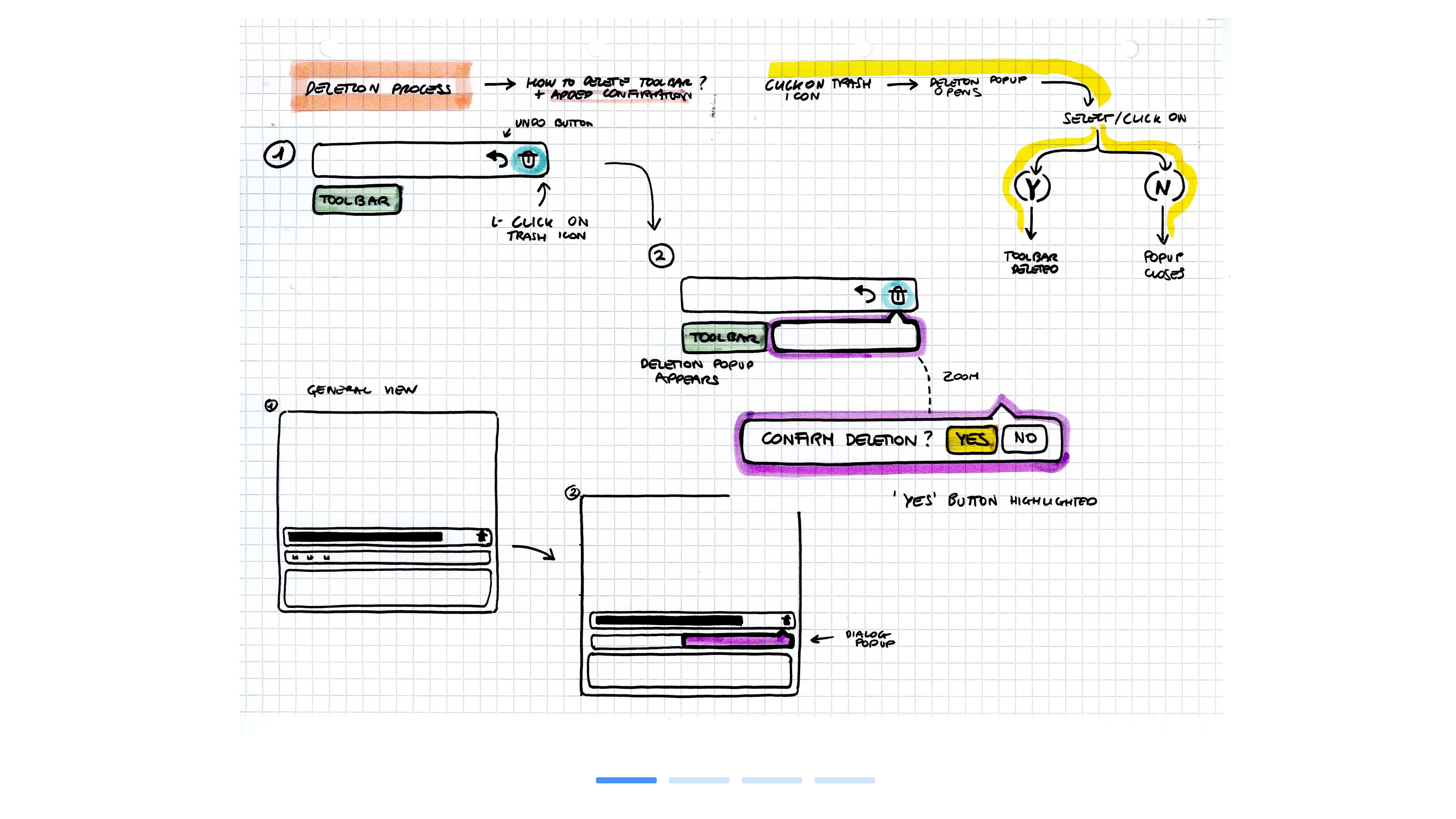
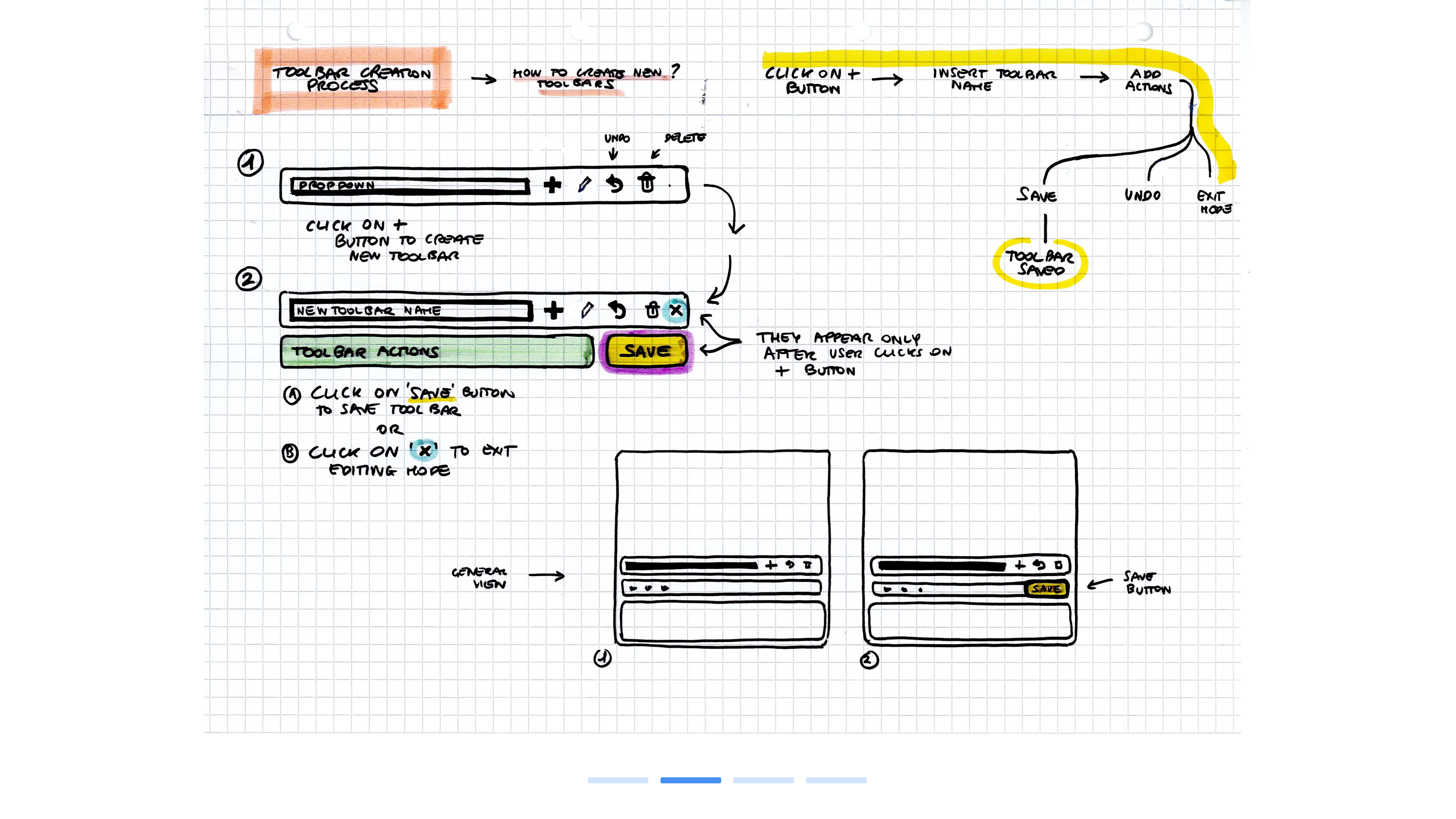
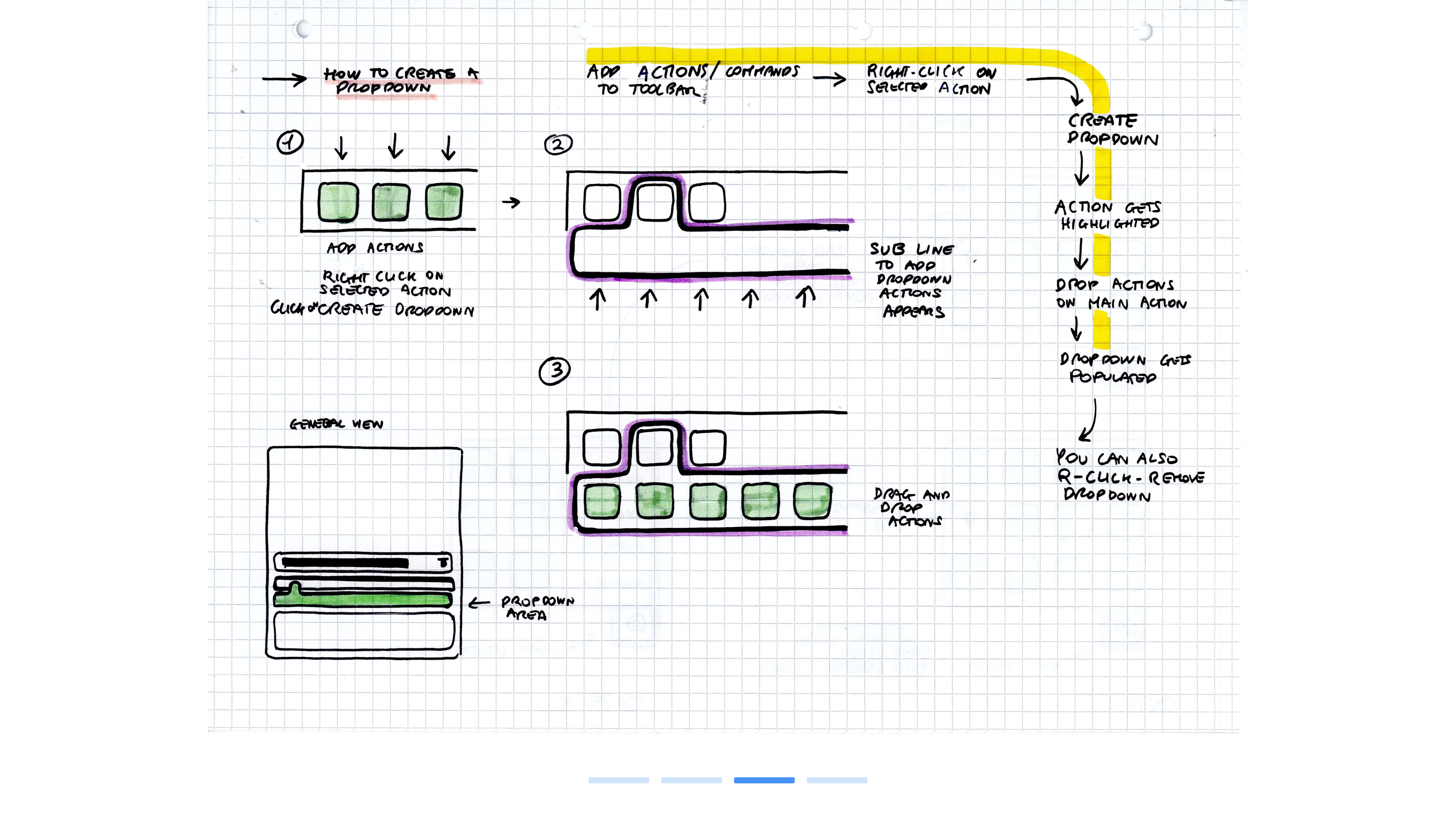
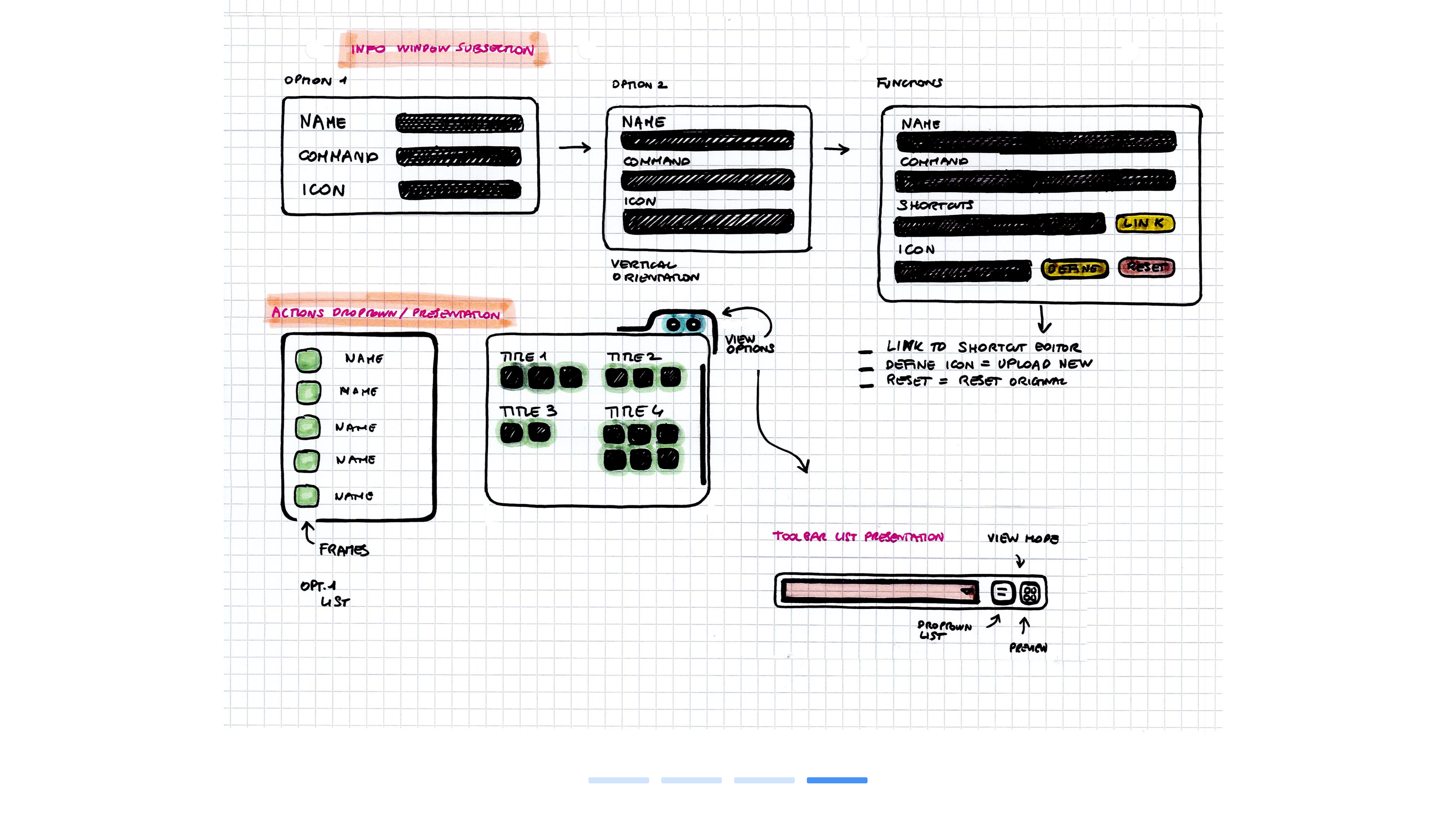
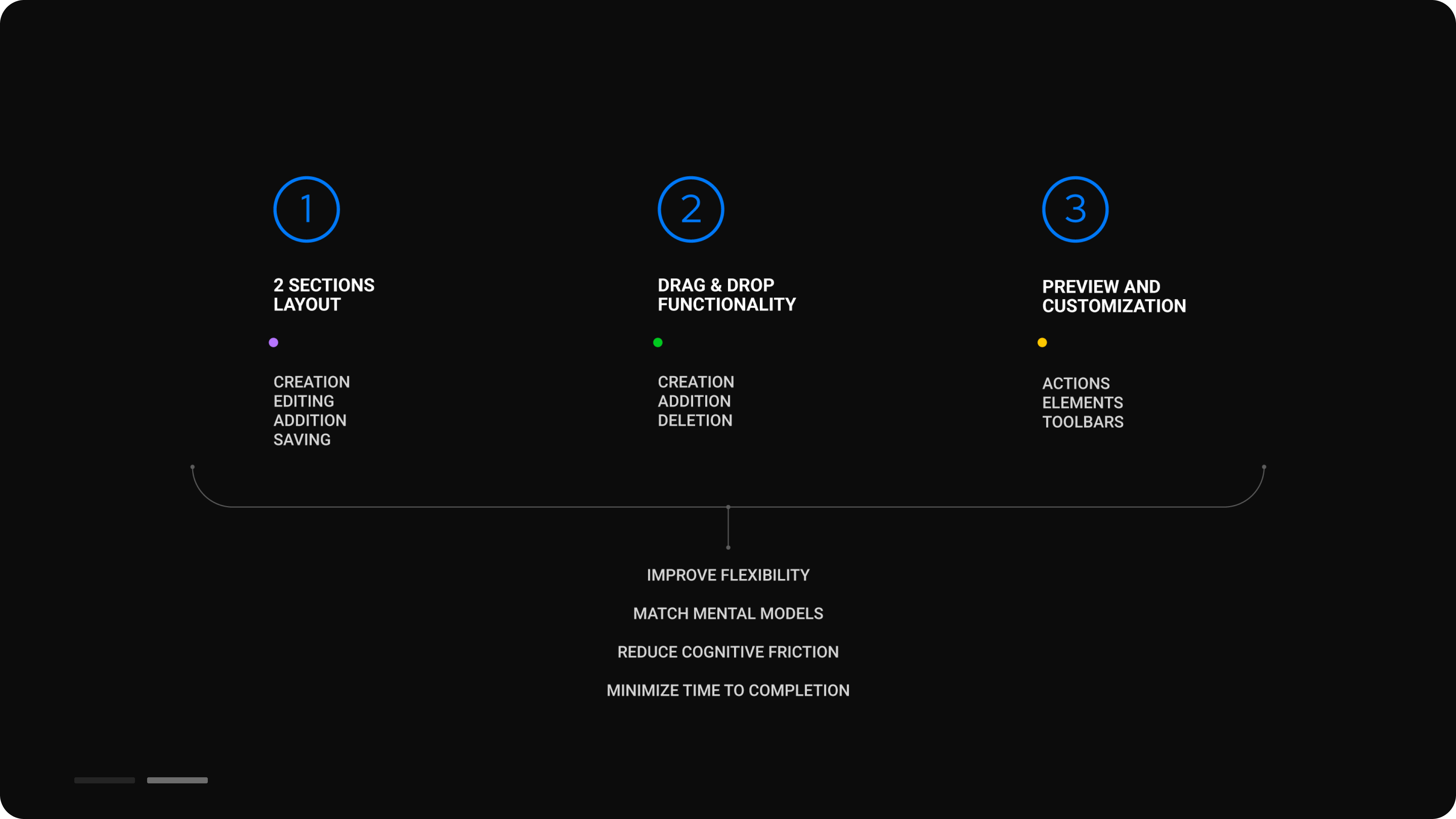
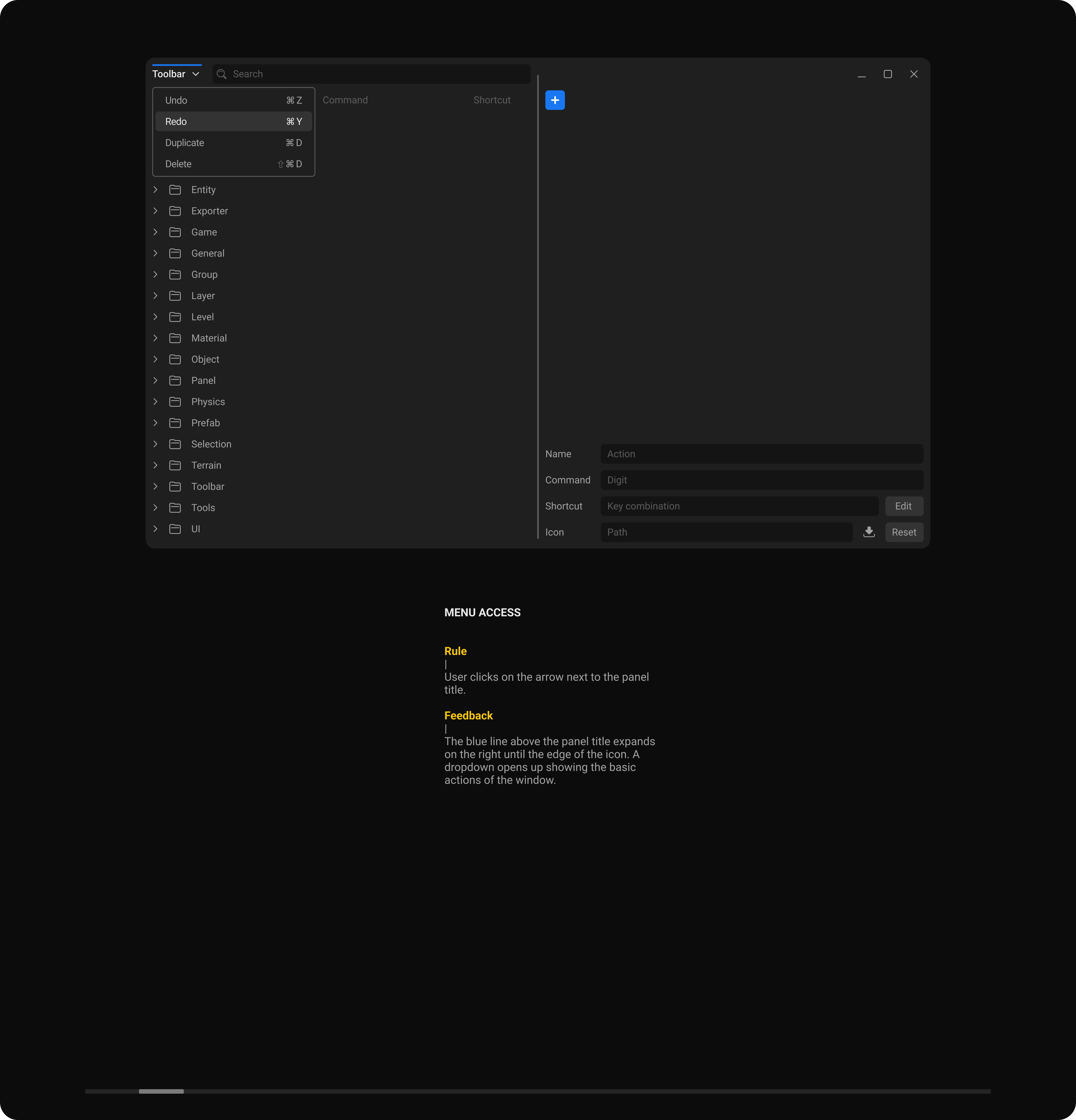
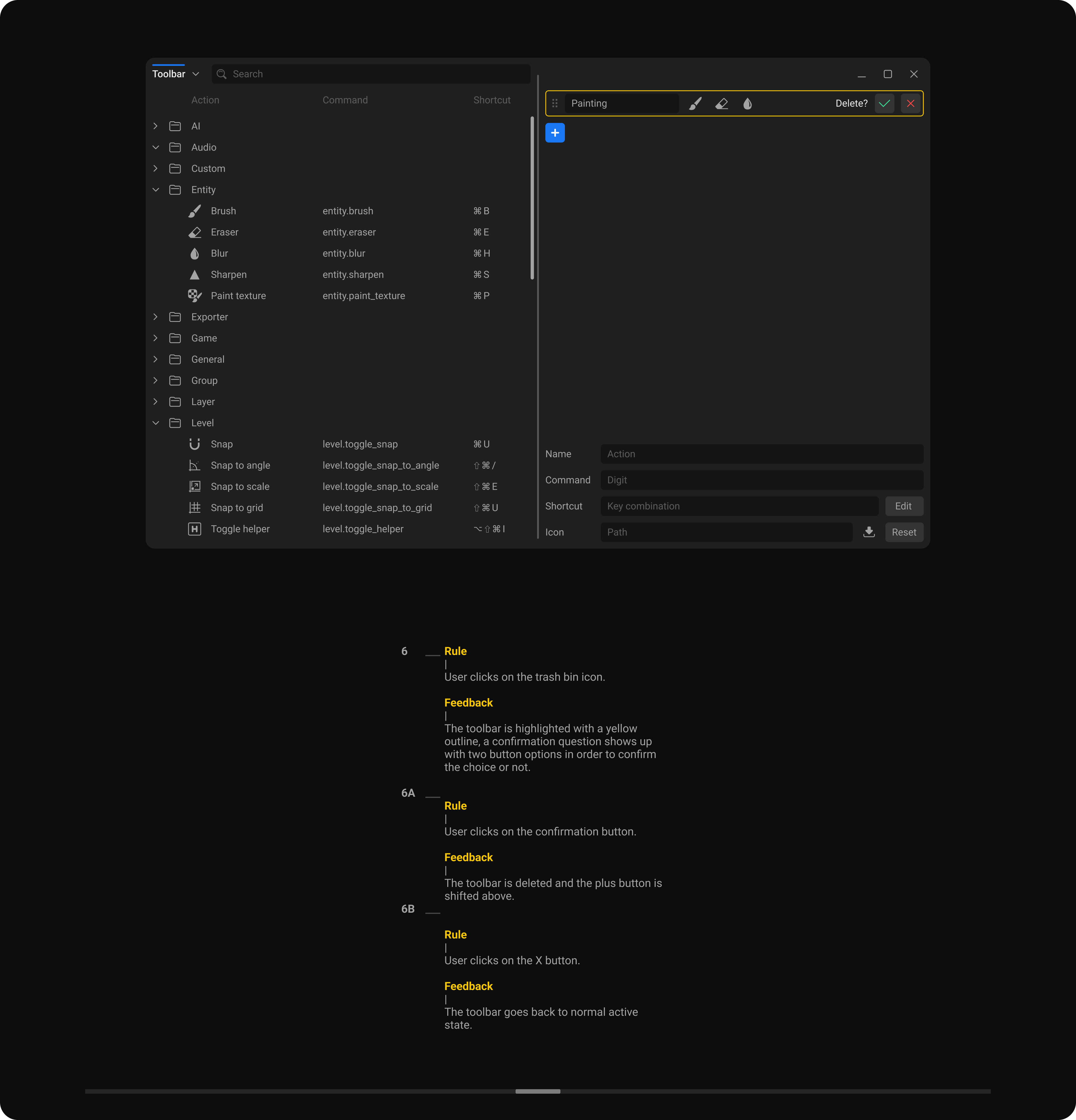
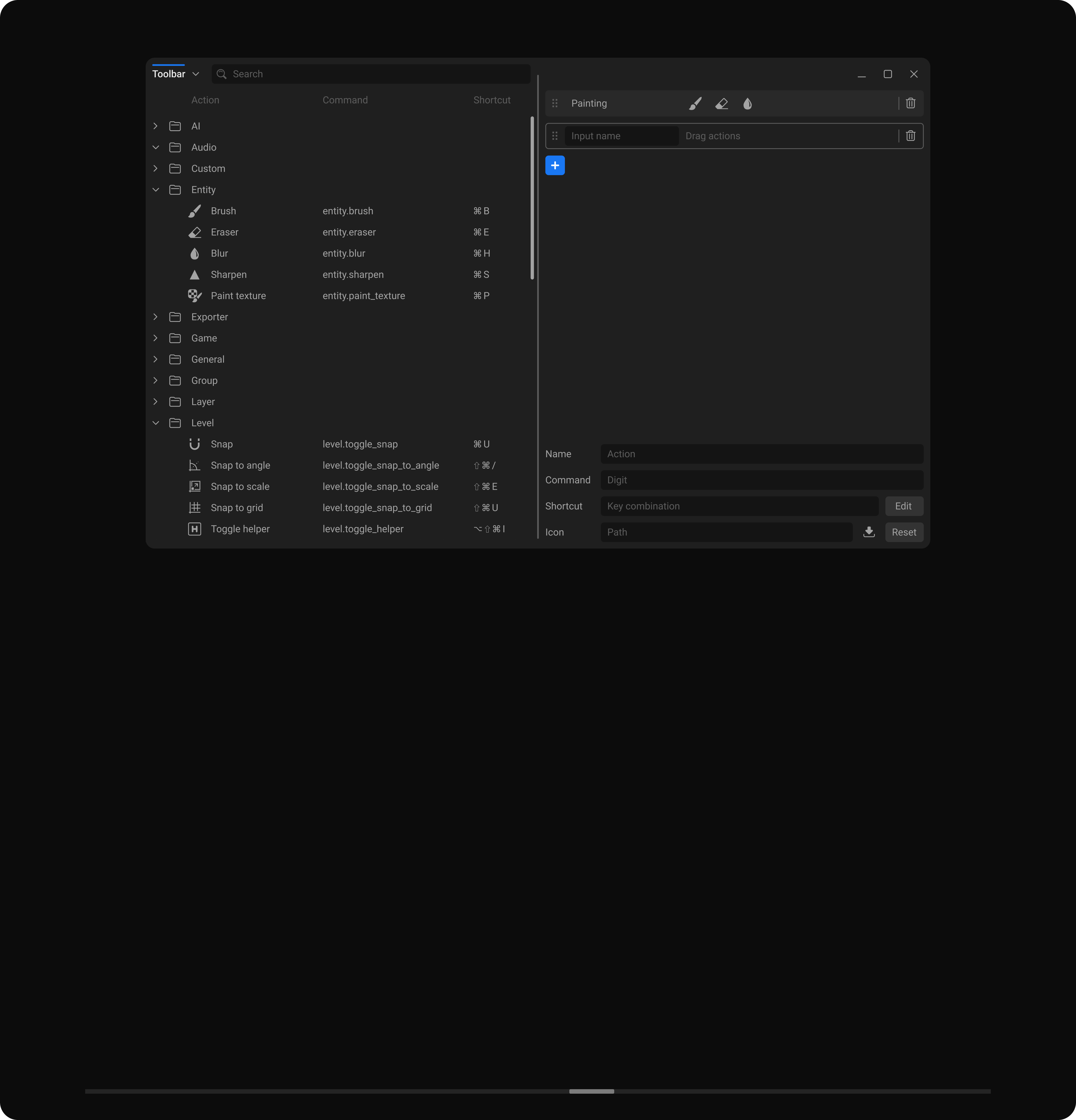
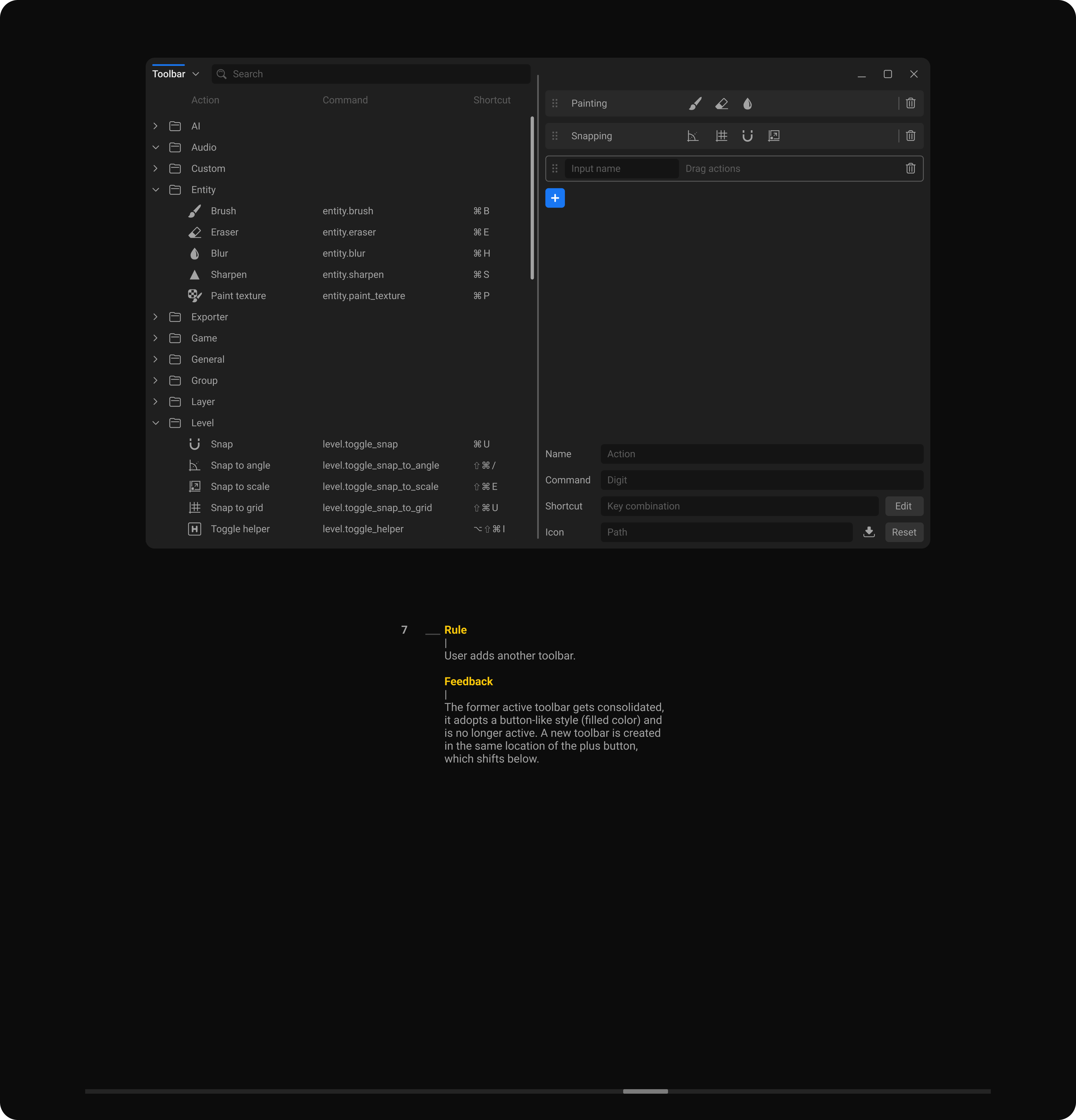
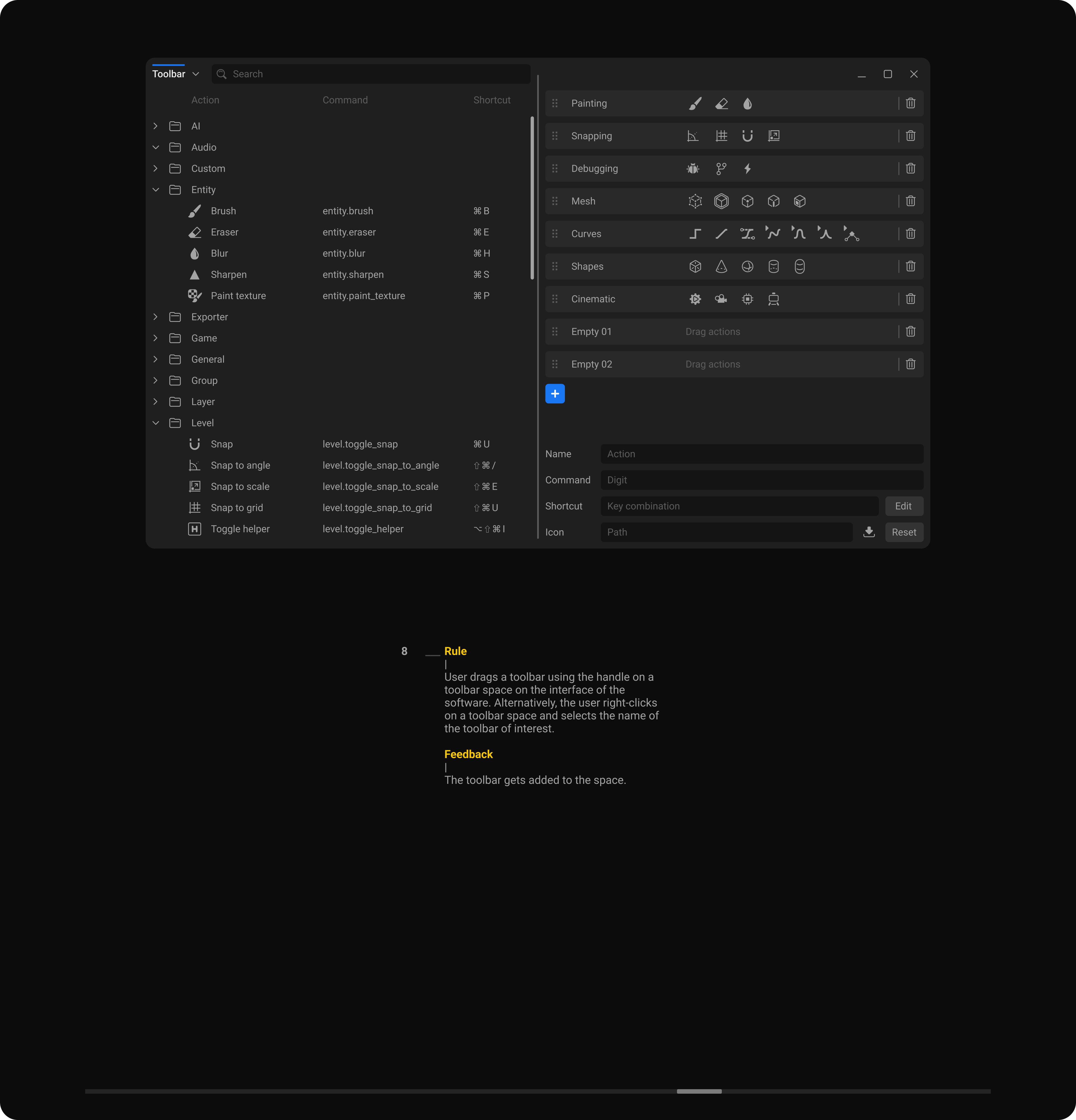
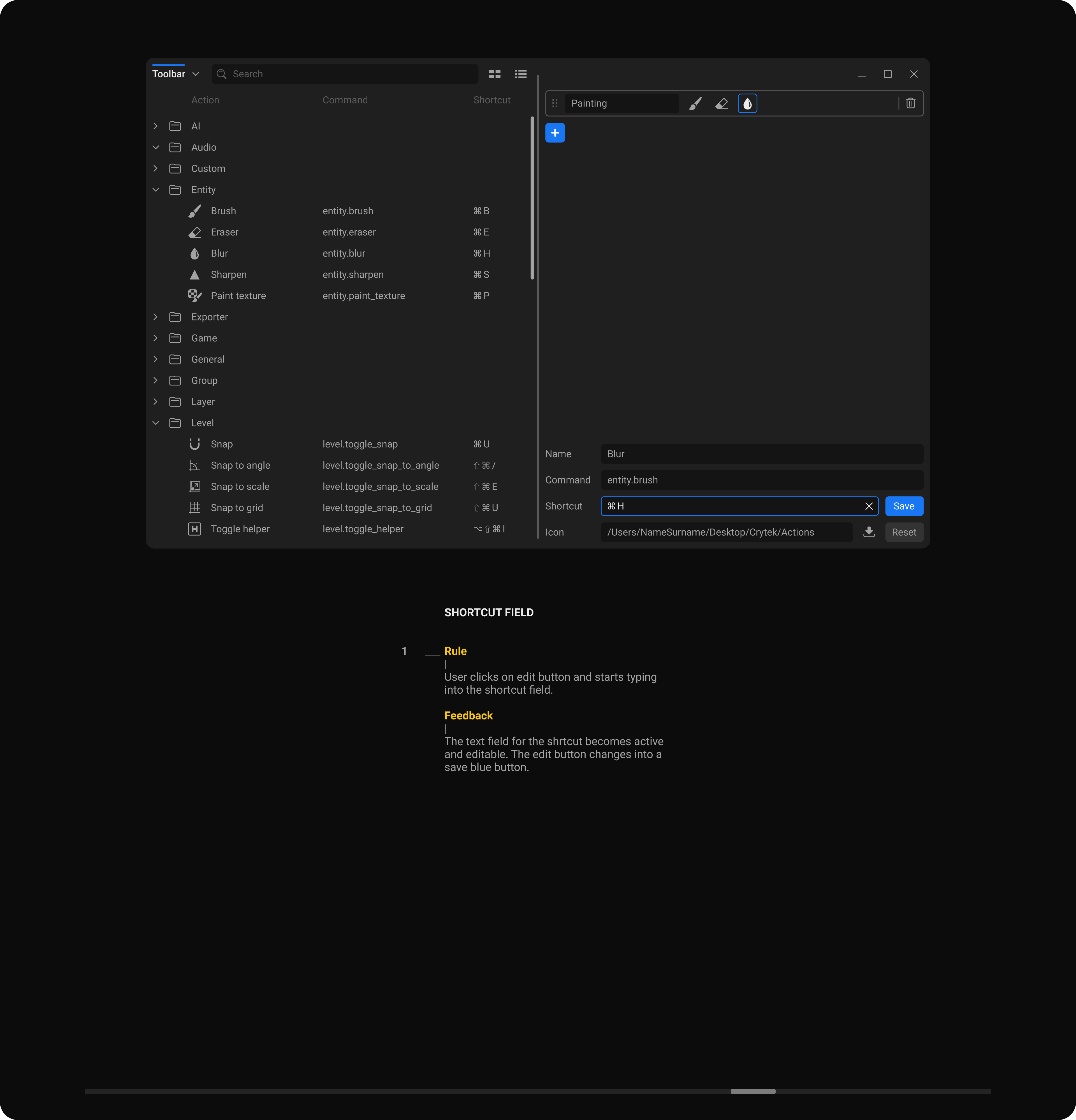
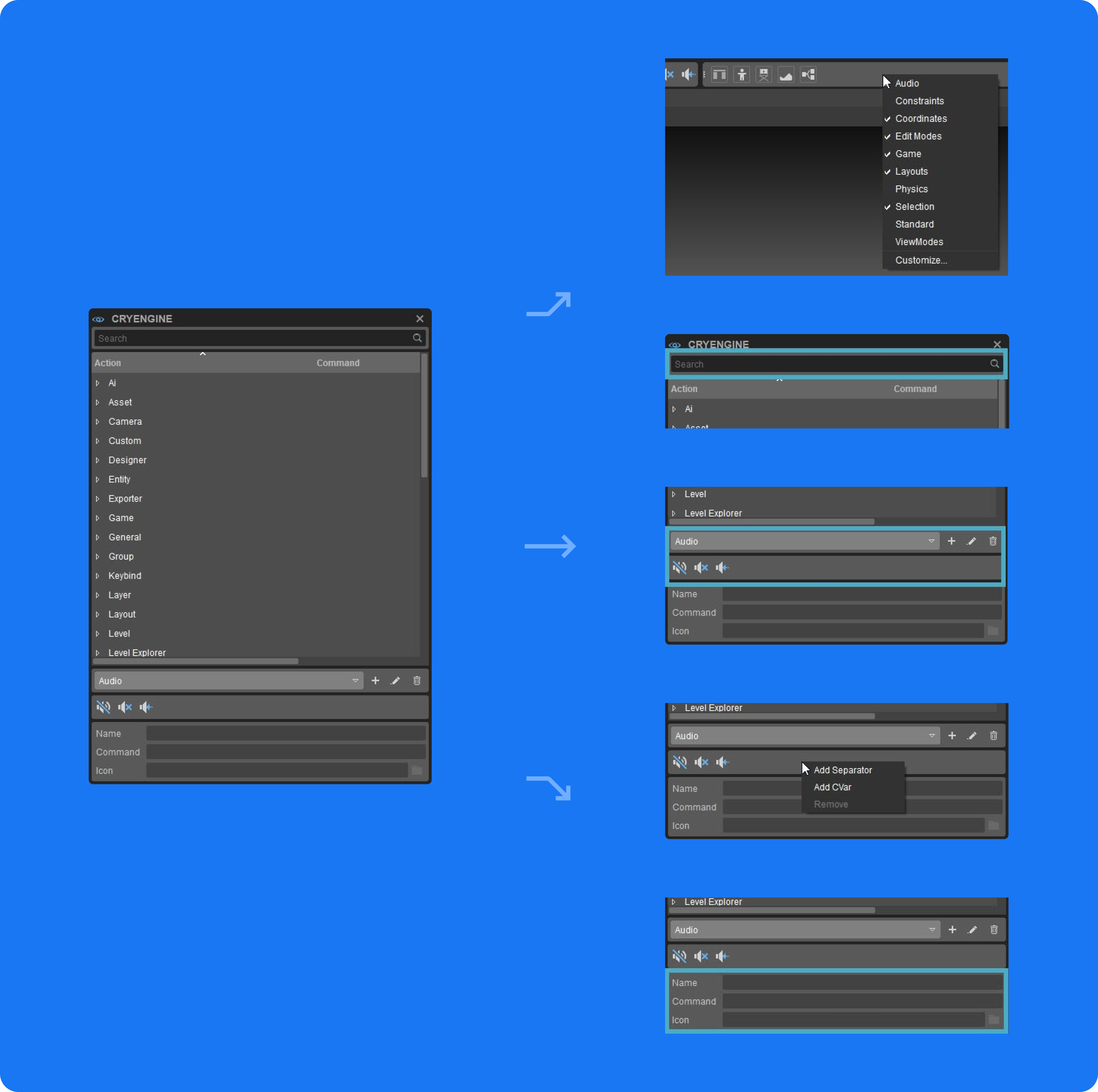
The toolbar editor window is divided into two sections. On the left, users can navigate, search, and select commands to add to toolbars. On the right, they can create and edit multiple toolbars simultaneously using a new, clearly visible plus button. Commands can be easily dragged and dropped from the left database area to the toolbar section on the right. Each toolbar includes an input field for renaming, and a trash icon on the right allows for quick deletion.
This new setup ensures the toolbar list remains always accessible, making creation and editing more seamless. Additionally, the interface now features more intuitive affordances and guiding elements to enhance usability. The overall result is an interface that feels lighter and easier to navigate while preserving the efficiency required by experienced users.
Design impact:
The redesign was intended to improve everyday productivity across multiple disciplines working inside the Sandbox Editor. Expected benefits included:
- Faster access to frequently used tools
- Reduced cognitive load during repetitive editing tasks
- Improved discoverability for less frequently used commands
- Better visual consistency across the editor
- A more scalable foundation for future functionality.
Previous editor
Browse the galleries to explore development sketches